
A guest room communicates something about you before your guest has unpacked a single bag. The moment someone steps into the room you have prepared for them, they read it — not consciously, not analytically, but in the immediate way people read any space they enter for the first time. A room that is clearly considered says you thought about their comfort. A room that is clearly an afterthought says everything else in your home mattered more. That distinction is felt within seconds and remembered long after the visit ends.
Most guest rooms fail not because of bad taste but because of bad priorities. The room gets whatever furniture was left over after the rest of the house was furnished. The bedding is the set that used to be in the master bedroom before it was upgraded. The artwork is the piece that did not quite work in the living room. The storage is whatever space the room happened to have after the bed was placed. The result is a room that functions as a holding space for displaced household items rather than a room that was designed for a guest’s specific experience of being in it.
The guest rooms that people actually remember — the ones that prompt a comment the next morning over coffee, the ones guests mention months later — are almost never the most expensive ones. They are the ones where someone made deliberate decisions about what the guest would need, what the room should feel like at night, how the morning light would land, and what small details would communicate welcome without requiring a sign to say so. Those decisions do not require a large budget. They require a shift in how you think about the room’s purpose.
This collection of fifty guest room design ideas addresses every dimension of what makes a guest room work. Some ideas address the architecture — the wall treatments, the window configurations, the ceiling character that makes the room feel designed from its bones outward. Others address the specific elements that determine whether a guest sleeps well: the mattress quality, the curtain weight, the ambient temperature, the quality of the bedside lighting for reading at midnight. Others still address the organizational layer — the storage, the surfaces, the small provisions that tell a guest you thought about what they would actually need rather than what a guest room is supposed to have.
Every idea is distinct, because a guest room that works does not need all fifty — it needs the right selection for the specific room, the specific guests, and the specific version of welcome you want to extend. Some of these ideas apply to a dedicated guest room used regularly for family visits. Others are built for rooms that double as home offices or personal spaces most of the year, activated as guest accommodation when needed. The range covers both contexts and the many variations between.
Read through with your room in mind and your guests in mind simultaneously. The best guest room design decisions answer both questions at once — they make the room better for guests while making it work harder for the household year-round. That dual purpose is not a compromise. It is the design challenge that makes the guest room the most intellectually interesting room in the house to get right.
1. A Hotel-Quality Bed as the Room’s Foundation

Every other design decision in a guest room rests on the quality of the bed. The wall color, the curtain weight, the bedside lamp — none of these matter if the guest wakes up on a mattress that is either too soft to support them properly or firm enough to leave them aching by morning. A hotel-quality bed is not defined by price alone; it is defined by the specific combination of mattress support, pillow selection, and linen weight that produces eight hours of sleep without a single moment of physical discomfort. Get this right and the guest remembers the room fondly regardless of what else is or is not there.
The mattress is the non-negotiable investment in a guest room. A medium-firm pocket spring mattress with a natural filling layer — wool, cotton, or cashmere — suits the widest range of body types and sleeping positions, which matters in a guest room where you are designing for someone whose sleep preferences you may not know in detail. A mattress that is too soft suits side sleepers but fails back sleepers within hours. A mattress that is too firm suits back sleepers but creates pressure points for side sleepers overnight. The medium-firm option is not a compromise — it is the educated choice for a room hosting multiple different people across its life.
Pillow selection is where most guest rooms make their most significant sleep-quality error. Two pillows per person, both in the same firmness, serves approximately half of all sleeping preferences. A guest room with two firm pillows and two medium pillows — clearly distinguishable and both accessible — covers the range that a single specification cannot. Adding a spare pillow in the wardrobe with a brief handwritten note telling the guest it is there if needed is the kind of small, considered gesture that guests mention specifically. It costs nothing and communicates that someone thought about their sleep rather than their visual presentation.
2. Layered Curtains for Light Control and Atmosphere

The curtain situation in most guest rooms is one of two equally inadequate scenarios: either the room has no curtains at all beyond a thin roller blind that lets through the morning light from six-thirty onward, or it has a single heavy curtain hung at the window that blocks all light but also removes every trace of atmosphere from the room at any other hour. Neither serves the guest well, and neither requires a significant budget to improve — the layered curtain approach costs roughly the same as one good curtain but delivers a dramatically better result.
The layered approach pairs a sheer linen or voile panel close to the glass with a heavier blackout-lined drape outside it on the same track or pole. During the day, the sheer filters the light and gives the room a warm glow without full brightness or full privacy. In the evening, both layers are drawn together and the blackout lining prevents any external light from reaching the room — which matters particularly in guest rooms that face street lighting, neighbors’ windows, or early sunrise on east-facing walls. The guest has complete control over their light environment, which is a degree of physical autonomy that a single curtain cannot offer.
The height at which the curtains are hung transforms the room’s proportions more than any other single soft furnishing decision. Curtains hung at window frame height make the room look small and the ceiling feel low. The same curtains hung from ceiling height — or as close to the ceiling as the room allows — make the windows appear taller, the ceilings feel higher, and the room read as considered rather than functional. The fabric pools slightly on the floor or breaks at the floor level, and that softness at the base of the panel adds an elegance that a curtain cut precisely to floor level never produces.
3. A Dedicated Bedside Experience

The bedside area in a guest room is used more intensively than any other surface in the room. It holds the phone being charged, the book being read, the glass of water needed at two in the morning, the glasses placed down before sleep, the earbuds, the lip balm, the small accumulation of personal objects that every traveler carries. A bedside surface that is too small for these items, has no power access, and offers no storage below the surface level is a bedside experience that fails the guest from the first hour of their arrival. Fix the bedside and you fix a significant portion of what makes guest rooms frustrating to sleep in.
The ideal guest room bedside has a surface area of at least forty by forty centimeters — enough for a lamp, a glass, and a phone simultaneously without anything competing for position. A small drawer beneath the surface provides immediate storage for items the guest wants at hand but not visible: glasses, charger cable, a paperback. Most importantly, the power outlet must be close enough to the bedside surface that a phone can charge while resting on or beside the nightstand rather than dangling from the wall on a cable that does not quite reach. A USB charging port integrated into a bedside lamp or a dedicated outlet strip mounted beneath the nightstand solves this problem permanently.
The lamp on the bedside is the detail that most guest rooms sacrifice for aesthetics over function. A lamp that looks beautiful but produces insufficient light for reading — either because the bulb is too dim or because the shade redirects the light away from the bed — fails the guest at the most private moment of their stay. A bedside lamp in a guest room needs to be readable at a thirty-centimeter viewing distance with the shade directing light toward the pillow rather than outward into the room. Test it yourself by lying in the bed before the guest arrives. If you cannot read comfortably after five minutes, the lamp is failing its primary purpose.
4. White or Neutral Linen Bedding
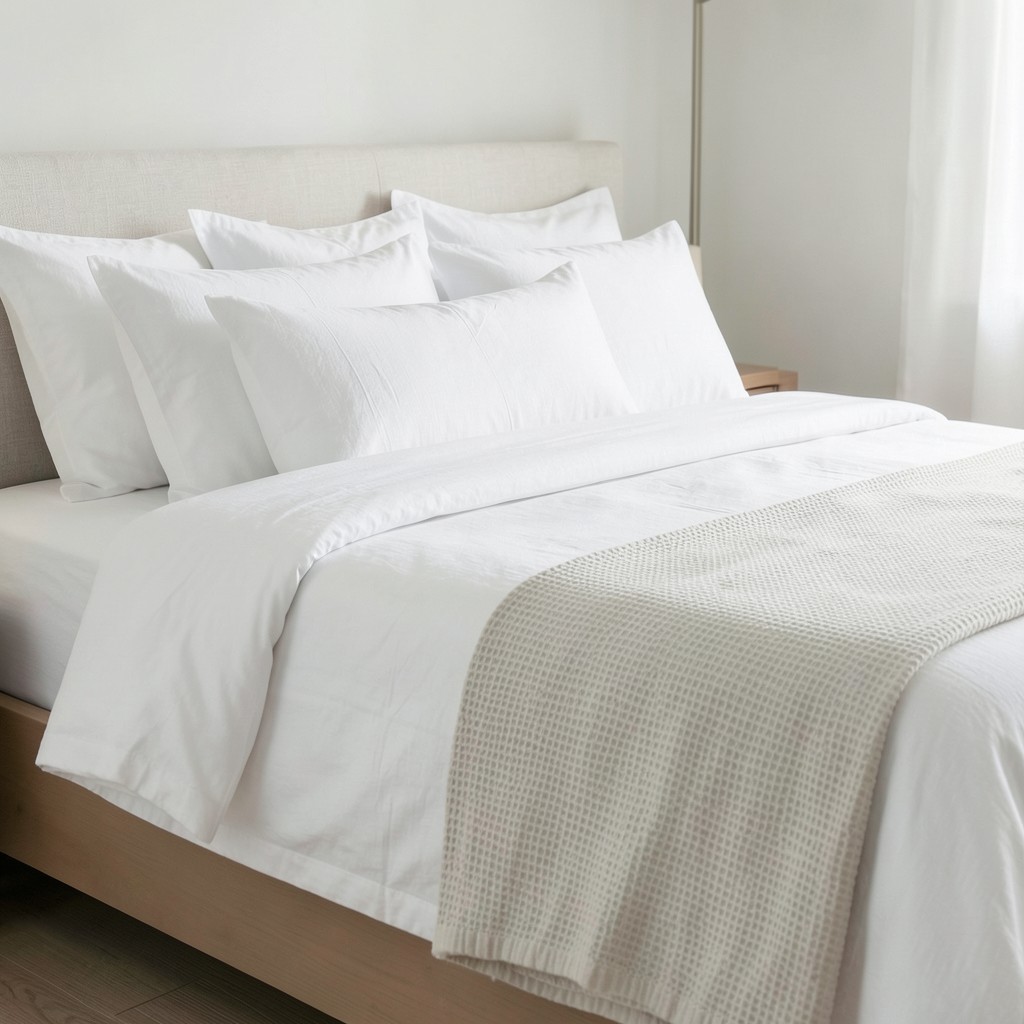
White linen bedding in a guest room communicates a specific message that no other color delivers with the same clarity: this room was prepared for you, and it was prepared well. The whiteness reads as fresh, as laundered, as hotel-standard in the best sense — and that reading reassures the guest immediately that they are in a clean, considered space rather than a room that has been left unchanged since the last visitor. The message is entirely about standards, and white communicates those standards without a word being spoken.
The material matters as much as the color. Standard percale cotton has a crisp, smooth surface that reads as clean and hotel-like but can feel cool and slightly stiff, particularly on colder nights. Linen bedding has a texture and weight that cotton percale does not — it softens immediately with body heat, breathes well in warm conditions, and has a natural wrinkle that signals genuine material quality rather than synthetic smoothness. For a guest room that sees infrequent use, linen also has a practical advantage: it can be stored longer between washes without developing the slightly stale quality that cotton develops in a wardrobe drawer over weeks or months.
The layering of bedding is where a guest room moves from adequate to genuinely thoughtful. A flat sheet below the duvet, a light cotton waffle throw folded at the foot of the bed, and two sizes of pillow — Euro squares behind standard pillows — produce a bed that reads as dressed with care rather than simply made. The throw at the foot is not purely decorative; it serves the guest who finds the room too warm for the full duvet and too cool for no covering at all. That middle-weight layer solves a problem most guest rooms create through its absence.
5. A Guest Room With Its Own Sitting Area
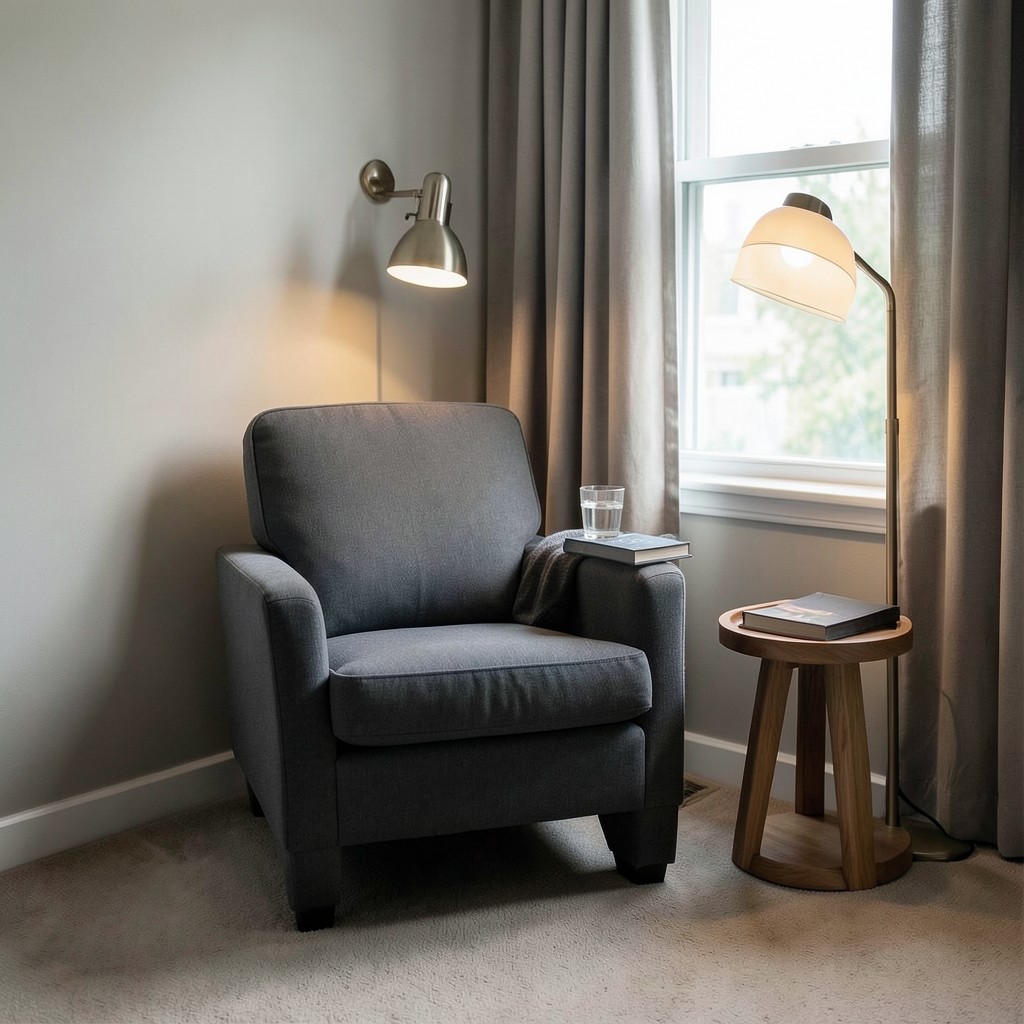
A chair — a single, well-chosen armchair positioned in the corner of the guest room with adequate reading light beside it — transforms the room from a sleeping space into a private suite. The distinction matters because a room that offers the guest somewhere to sit other than the bed gives them a physical choice about how to occupy their space. They can lie down, sit up, read in a chair, look out the window from a seated position, video call from a position that does not show them sitting on a bed. That range of physical options is what makes a guest room feel generous rather than merely functional.
The chair does not need to be expensive or large. A slimmer chair in a comfortable upholstery — the profile matters for a room where floor space may be limited — with firm enough seating to support an hour of reading without discomfort delivers everything required. The arm height should allow the guest to rest a book, a phone, or a glass on the arm without reaching awkwardly. A small side table beside the chair — even a simple stool or a wooden tray on a low stand — extends the utility of the seating area to the point where it functions as a genuine alternative to the bed for extended occupancy.
The placement of the chair relative to the room’s light sources determines whether it gets used. A chair positioned opposite the window, in the path of natural light during the day, and with a floor lamp positioned behind and slightly above the right shoulder, is a chair that invites use because the physical conditions for comfortable occupation are present. A chair pushed into a dark corner without a dedicated light source is a chair where clothing gets draped at the end of the day. The design decision and the placement decision are inseparable — make both correctly and the sitting area becomes the detail guests mention when they describe the room.
6. Smart Storage That Anticipates the Guest’s Needs
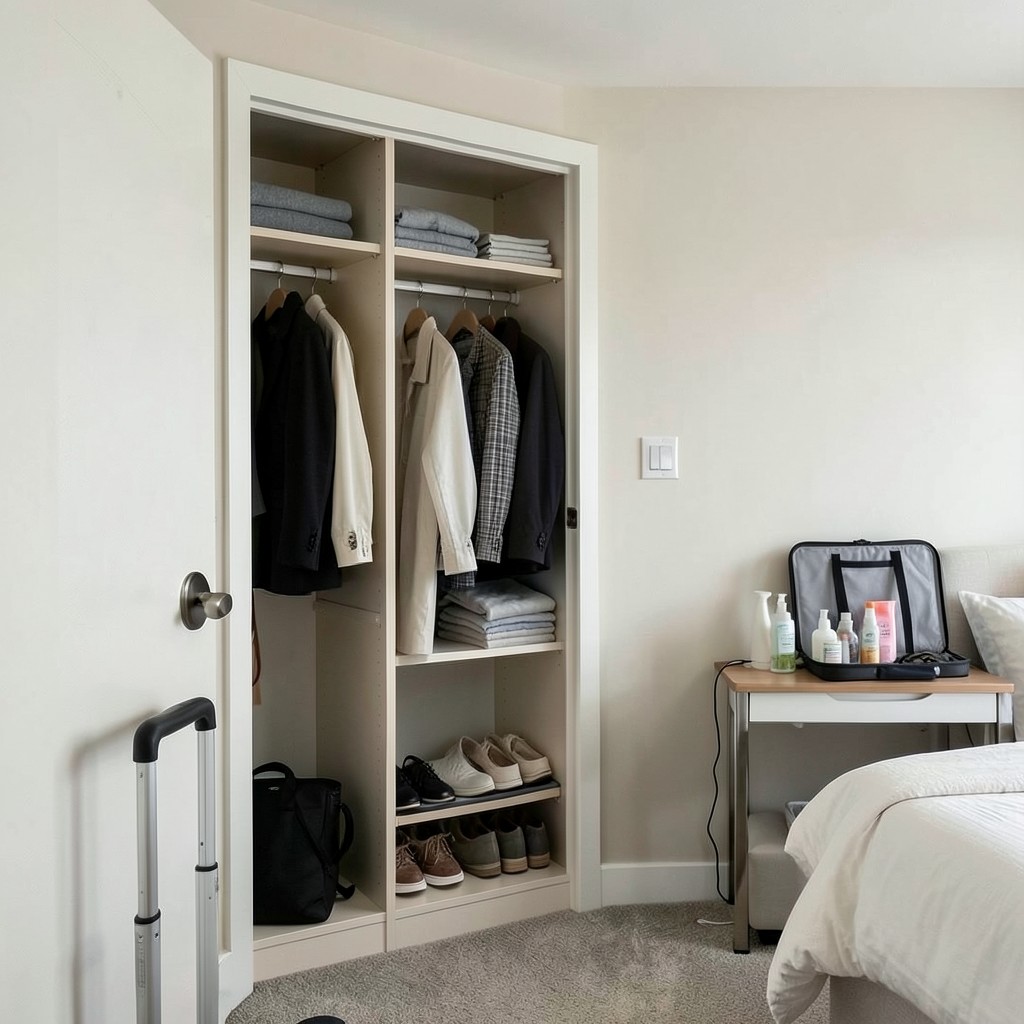
Guest storage is one of those design considerations that sounds minor and accumulates into a significant daily friction when it is absent. A guest who arrives with a suitcase and has nowhere to hang clothes, no surface to set their toiletries, no drawer for the items they want out of the bag but not worn again immediately — that guest lives out of a suitcase for the duration of the stay, which produces a particular low-level discomfort that is entirely preventable through considered design. The room does not need a walk-in wardrobe. It needs a specific minimum of storage at the right locations.
Hanging space is the first requirement. A wardrobe with at least thirty inches of clear hanging rail — enough for a week’s worth of hanging garments without cramming — combined with a shelf above for folded items and a section for shoes below covers the storage needs of most stays. A row of hooks on the wall behind the door handles coats, bags, and the items guests want accessible without opening a wardrobe. These hooks cost almost nothing to add and solve the problem of the coat on the chair-back or the bag on the floor that accumulates in guest rooms without them.
A surface at standing height — a small dresser or a console — provides the location for the open suitcase contents that are not going into the wardrobe: toiletries being used daily, accessories in rotation, the items the guest handles multiple times a day and needs at accessible height rather than floor-level. Without that surface, those items migrate to the bedside table, the windowsill, and the floor beside the bed, and the room begins to look and feel disordered within twenty-four hours of arrival. The right surface at the right height keeps the room functioning as designed rather than slowly reverting to chaos.
7. A Guest Room With Warm Ambient Lighting

The lighting in most guest rooms consists of a central overhead fixture and a bedside lamp on each side of the bed. That arrangement produces two lighting states — all on or reading light only — with nothing in between. The missing state is the one a guest needs most: a warm, ambient, low-level light for the hours between dinner and sleep when the room should feel welcoming and relaxed rather than either brightly lit or completely dark. Adding even one additional light source in the guest room on its own switch changes the room’s evening character significantly.
A floor lamp positioned in a corner — behind a chair or in the far corner from the bed — produces warm ambient light that fills the lower half of the room without activating the overhead. A table lamp on the dresser creates a warm pool of light at standing height that gives the room a layered quality at night. Either of these, in a bulb temperature of 2700K or below, produces the golden warmth that makes a room feel inhabited and welcoming rather than functionally lit. The specific warmth matters in a guest room because the guest does not know the space well and relies on the room’s light quality to signal whether it is a comfortable environment or an indifferent one.
Dimmer switches in a guest room are an upgrade that costs almost nothing and delivers a quality improvement that guests feel but rarely identify by name. The ability to lower the overhead light from full task brightness to a gentle ambient glow, without turning it off entirely, is the difference between a room with one lighting mode and a room with a full range of atmospheres available. A guest who arrives, turns on the overhead, and finds it floods the room with uniform brightness at ten in the evening — when they would prefer a calmer light — is a guest who either endures discomfort or fumbles with unfamiliar lamp switches. A dimmer on the overhead solves both problems before they arise.
8. A Thoughtfully Chosen Color Palette

The color of a guest room determines how the space feels to inhabit at all hours — not just how it photographs or how it reads when the door is open from the hallway. Colors that are bold and energetic read beautifully in design publications and produce rooms that are stimulating to be inside for twenty minutes. The guest sleeping there for three nights has a different experience from the photographer who spent two hours in the room. Guest room colors should prioritize the quality of rest they support over the quality of the impression they make.
The palette that works best in most guest rooms is one that the human nervous system reads as safe and settled: warm neutrals, soft greens, quiet blues, earthy tones with enough warmth to prevent the room from reading as cold at night. None of these are boring choices when they are executed with considered material pairings and good light. A dusty sage green wall with warm white woodwork, linen bedding, and natural wood furniture is not a neutral design — it is a carefully composed environment that produces calm without demanding attention, which is exactly what a sleeping room for a guest should do.
Accent color in a guest room should be used to add personality without adding energy. A terracotta throw across a white bed, a deep teal ceramic lamp base in a room of warm neutrals, a single richly colored artwork on an otherwise quiet wall — these are the applications that give a guest room a point of view without turning the room into a visual statement that competes with the guest’s need for a restorative environment. The accent exists to make the room feel chosen rather than defaulted to, not to make the room feel exciting. The distinction between those two goals produces entirely different rooms.
9. A Guest Room With Beautiful Art
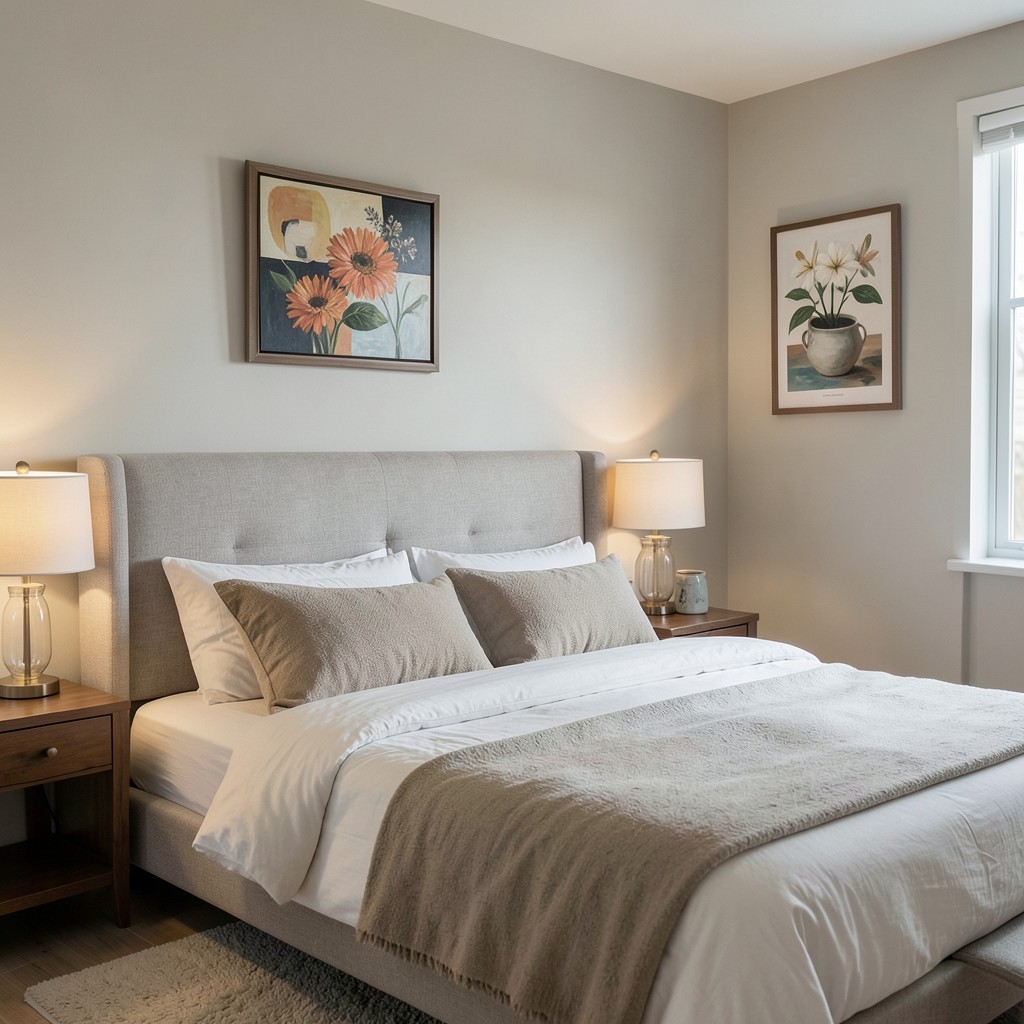
A piece of artwork in a guest room — one carefully selected piece at the correct scale for the wall it occupies, hung at the height at which it is meant to be seen from within the room — communicates that the space was designed for someone, not just furnished for a function. Artwork is the element that most guest rooms skip, substituting a generic print in a stock frame that reads as a placeholder rather than a choice. A single genuine artwork — a painting, a limited edition photograph, a hand-pulled print, a ceramic piece mounted on a shelf — changes the room’s entire register.
The scale of the artwork must match the wall it occupies and the bed it sits above or beside. A small print on a large wall above a king bed reads as tentative and undersized — the visual gap between the art’s edge and the wall’s edge is too large and the composition feels incomplete. A piece that fills roughly two-thirds of the wall width above the bed’s headboard reads as proportionally resolved and gives the room a clear focal point. If the artwork is being positioned on the wall beside the bed rather than above it, the scale can be smaller but the height must be correct for the viewing angle from the bed — art hung for standing viewers is almost always too high for someone lying in a bed beside it.
The content of the artwork matters differently in a guest room than in any other room in the house. Artwork in a personal bedroom can carry as much emotional weight and personal reference as the owner chooses. A guest room, occupied by people who may not share those references, benefits from artwork that is engaging without being demanding — pieces that reward attention without requiring biographical context to appreciate. Abstract work in a considered color palette, botanical or landscape photography, handmade ceramics with compelling surface quality — these categories produce art that any guest can spend time with comfortably without needing to know the story behind the choice.
10. A Guest Room With Good Temperature Control

A room that is either too cold at night or too warm to sleep in is a room that fails its guest regardless of every other design decision made in it. Temperature is the most fundamental comfort variable in any sleeping environment, and it is the one that most guest rooms handle worst because the room is outside the main household’s daily circulation and its temperature is not monitored or adjusted the way occupied rooms are. A guest who sleeps poorly because the room was cold on a winter night, or who lay awake sweating through a summer visit, remembers that discomfort long after every other detail of the stay has faded.
The simplest temperature provision in a guest room is a dedicated radiator on a thermostatic valve separate from the rest of the home’s heating zones, so the room can be pre-warmed to sleeping temperature before the guest arrives and maintained at that temperature independently of the rest of the house. In rooms without radiators, a portable oil-filled electric radiator on a timer provides the same control at modest cost. The guest should find the room at a comfortable temperature when they arrive — walking into a cold room and searching for a heater is a first impression that no amount of beautiful bedding corrects.
An electric blanket on the bed — switched off and clearly available for the guest’s use — is the provision that solves the middle-of-the-night cold problem that most heating systems do not address. A room that heats to a comfortable temperature at bedtime but cools gradually through the night, as heating systems typically do, becomes cold toward morning at the hours when sleep is lightest and disturbance most likely. An electric blanket gives the guest control over their immediate thermal environment without requiring the household’s entire heating system to run overnight. It is the most cost-effective comfort addition a guest room can offer relative to its installation cost.
11. A Double-Purpose Guest Room and Home Office

Most homes have more need for a dedicated workspace than they have guests, and the guest room that sits empty for eleven months of the year while the household searches for somewhere to set up a laptop represents a spatial resource being wasted by a rigid functional designation. A room designed to serve both purposes — a home office for the household on ordinary days, a guest room when needed — solves both problems without doubling the square footage required to solve either one separately.
The key to making the dual-purpose room work is ensuring that the transition from office to guest room can be completed in under thirty minutes without the room revealing its office identity to the guest. A daybed or sofa bed rather than a fixed bed allows the sleeping surface to be folded down from a daytime seating configuration. A desk that looks like a console table when cleared, rather than a purpose-built desk with a monitor arm and cable management visible from across the room, reads as furniture rather than equipment when the office function is packed away. Concealed storage for work equipment — a cabinet that closes over the monitor, a drawer unit on wheels that rolls under the desk and disappears — prevents the office context from asserting itself in the room when the guest arrives.
The lighting in a dual-purpose room must serve both functions without compromise. Office work requires task lighting at the desk — directed, sufficient, and positioned to prevent screen glare. Guest sleeping requires warm, ambient, dimmable lighting that has nothing to do with task performance. A desk lamp that serves the office and a separate ambient lighting circuit that serves the guest room, on separate switches, allows the room to transition between its two identities through lighting rather than through any structural change. The lighting is the fastest and cheapest tool for changing a room’s character, and in a dual-purpose room, it is the most valuable one.
12. A Guest Room With a Distinctive Theme
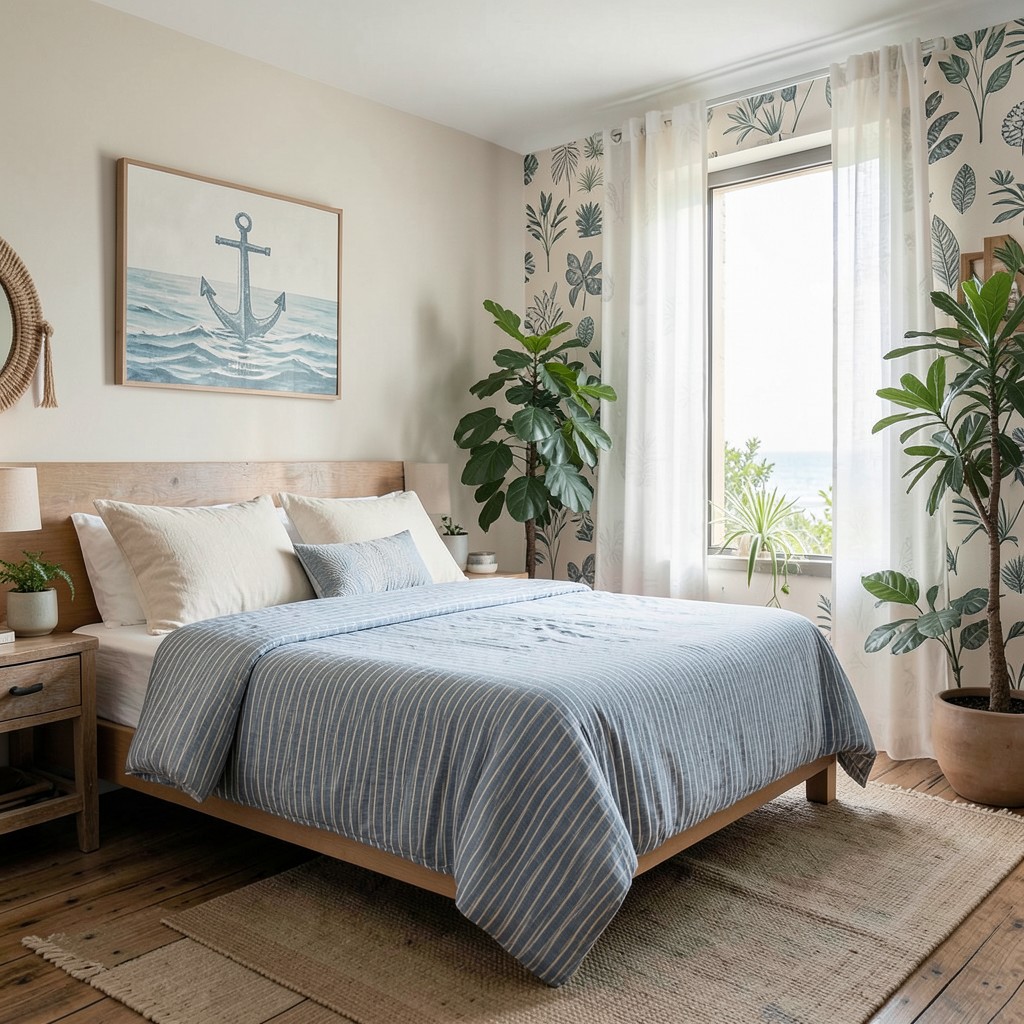
A guest room with a clear, considered design theme — coastal, botanical, Japanese-inspired, maximalist floral, mid-century modern, Moroccan — gives the visitor an experience they cannot replicate in a standard hotel room. The themed guest room is interesting to be inside in a way that a generic room is not, and that interest keeps the guest engaged with the space rather than merely tolerating it. It also communicates that the room’s design was intentional — that someone made choices and committed to them — which reads as a form of hospitality in itself.
The risk of a themed guest room is executing the theme at a superficial level that reads as a mood board rather than a room. A coastal room with a anchor print above the bed, a blue striped duvet, and a rope mirror does not constitute a design — it constitutes a collection of coastal props that cancel each other out through sheer thematic density. A coastal room that works uses the material qualities of a coastal environment — natural linen in bleached, sun-faded tones, weathered timber with visible grain, unglazed ceramics in sandy and ocean-blue tones, a large window with sheer curtains that move in a breeze — and produces the feeling of the coast through material honesty rather than through symbolic decoration.
The depth of the theme is what separates a guest room that impresses from one that entertains. A botanical theme that goes all the way through the room — living plants at different scales, botanical artwork, a wallpaper with genuine botanical illustration quality, ceramics with leaf-form shapes — produces a room with its own genuine personality. A guest spends time in that room noticing new details, which is the experience of being in a well-considered environment rather than a functional space. That sense of discovery — of a room that rewards attention — is the highest standard any guest room can meet.
13. A Compact Guest Room With Smart Space Planning
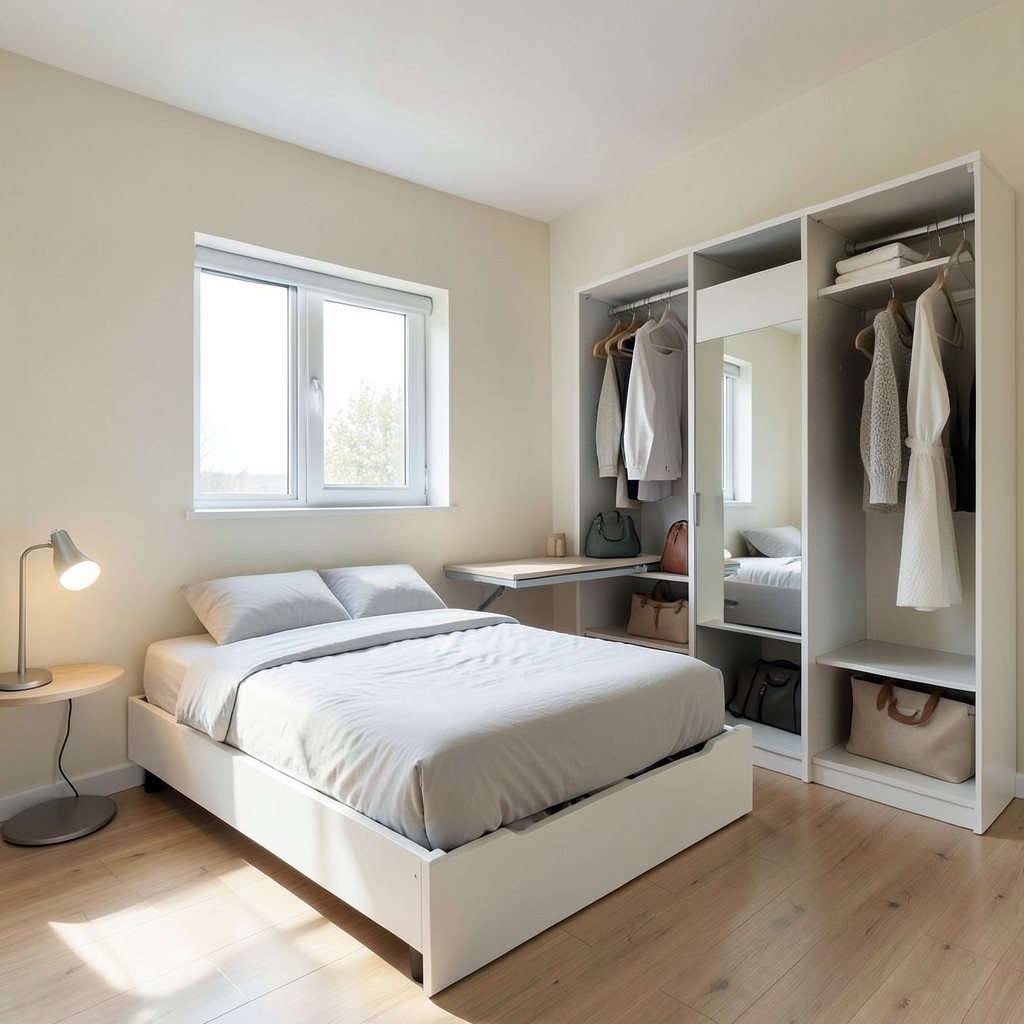
A small guest room is a design problem that most people approach by removing things — the wardrobe is too big, the desk takes too much space, the chair does not fit — until the room contains nothing but a bed with minimal clearance on each side. The resulting room functions adequately as a sleeping space and does nothing else, which means the guest has nowhere to put their bag, nowhere to sit other than the bed, and no surface for anything beyond the bedside lamp. Smart space planning takes a different approach: rather than removing elements, it reconfigures them to deliver more function in the same footprint.
A wall-mounted folding desk that closes flat when not in use provides a working and dressing surface without occupying any permanent floor area. A bed with integrated storage drawers beneath recovers the floor volume below the sleeping surface for clothing and bag storage without requiring a separate wardrobe unit. A single high-quality wardrobe positioned to use the full wall height — ceiling to floor, with internal hanging, shelving, and drawer organization — delivers the same storage as a larger wardrobe in a fraction of the floor footprint. Each of these decisions recovers floor space without removing function, and the cumulative effect of all three is a small guest room that functions as well as a larger one.
The visual space in a compact guest room matters as much as the physical space. Mirrors — a full-length mirror on the inside of the wardrobe door, or a large wall mirror positioned to reflect the window and its light — expand the perceived dimensions of the room without any structural change. Light wall colors keep the room from feeling enclosed. A low bed profile — a platform bed or a bed with slender legs rather than a bulky base — shows more floor beneath it, which makes the room read as more spacious. These are visual tools rather than structural ones, and in a small guest room, every visual tool that adds perceived space is as valuable as any physical one.
14. A Guest Room With Local Character

A guest room that reflects the character of the place it is in — through local artwork, regionally made textiles, ceramics from local makers, a color palette drawn from the surrounding landscape — gives a visitor staying in the home a connection to the place they are visiting that a hotel room never provides. The guest arrives from somewhere else and the room offers them an immediate encounter with where they have arrived, communicated through objects and materials that were made there or chosen because of their relationship to the place. That locatedness is a form of hospitality specific to residential accommodation and one of its most compelling qualities.
Local artwork is the most direct expression of this idea and the most memorable for the guest. A photograph of a landscape within walking distance of the house, printed and framed well, gives the guest a relationship to the immediate environment that generic landscape art cannot. A painting by an artist who lives and works in the same town or city carries a provenance story that the guest can take away — they slept beneath it, they had coffee with the host who told them about the artist, they walked past the artist’s studio the next morning. That narrative layer is only available in a residential space designed with local awareness.
The textile layer of a locally referenced guest room can be built around regional craft traditions — a hand-woven wool blanket from a nearby maker, a linen duvet cover from a manufacturer within the region, ceramics from a local pottery for the bedside water jug and glass. None of these need to carry a label or a price tag to communicate their origin. The quality of hand-craft and the specific material character of locally produced goods reads differently from mass-produced equivalents, and a guest who notices that everything in the room has a material quality above the standard of what they could have found in any shop will ask about it. That question is the beginning of a conversation about where they are, which is the best possible outcome a thoughtfully assembled guest room can produce.
15. A Guest Room With a Luxurious Bathroom Provision

The bathroom experience for a guest is directly proportional to the thoughtfulness of what has been provided and the degree to which the guest feels they have not had to think about what they needed. A bathroom stocked with the host’s half-used products, insufficient towels, and no provision for a guest who may have forgotten something in their bag communicates the opposite of welcome — it communicates that the guest’s bathing requirements were considered an afterthought. The reverse of this — a bathroom prepared with the guest’s specific needs in mind — is one of the highest forms of domestic hospitality.
Fresh towels — at minimum two per guest, in a size that is actually useful rather than decorative — are the foundation of the guest bathroom provision. A hand towel for the basin, a bath towel of genuine thickness and absorbency, and a bath mat that has been washed recently rather than the mat that normally lives in the family bathroom constitute the minimum. Beyond that minimum, a small basket of guest provisions — travel-size toiletries for hair, skin, and teeth, a fresh bar of soap, cotton wool pads, a spare toothbrush in packaging — eliminates the moment of quiet panic that every guest has experienced when they have forgotten something and are too far from a shop to retrieve it easily.
The towel arrangement in the guest bathroom communicates the standard of the preparation before the guest has opened a single bottle. Towels neatly folded and stacked, or rolled and arranged in a basket, with the hand towel hung on the rail at a height and in a position that makes it obvious where it is meant to be used — these are the hospitality details that hotel housekeeping understands and most home guest bathrooms skip entirely. The guest does not consciously evaluate the towel arrangement. They simply feel, the moment they enter the bathroom, whether the room was prepared for them or prepared in a general sense. The difference is entirely in the specificity of the arrangement.
16. A Guest Room With Ceiling-to-Floor Curtains

There is a proportion law in soft furnishings that most guest rooms violate consistently: the curtain hung at the window frame rather than at the ceiling makes the room smaller, the window shorter, and the ceiling lower in a single decision that costs the same as the correct one. Curtains hung from the ceiling — or from a pole positioned as close to the ceiling as the room allows, within two to three inches — make the window appear to run from floor to ceiling regardless of the actual window dimensions. The room reads as taller, the window reads as grander, and the fabric pools slightly at the floor in a way that adds a softness and richness that a precisely cut curtain never achieves.
The fabric weight for a guest room ceiling-to-floor curtain should be chosen for its function before its appearance. A sheer linen at ceiling height gives the room daytime privacy and light diffusion without blocking the window or adding any heaviness to the room. A lined heavier curtain — either a cotton canvas, a velvet, or a thick woven linen — provides blackout functionality for guests who need full darkness for sleep. The lined option is the better default for a guest room because you cannot know which guests are light sleepers and which are not, and erring toward darkness-capable is the inclusive choice. The sheer can be layered behind the lined curtain if daytime light quality matters for the room’s other functions.
The width of the curtain panel determines whether the window looks generous or pinched when the curtains are drawn open. A panel that barely covers the window when closed, hanging in a single flat layer on each side, produces a gathered, slight look that reads as insufficient. Panels with extra width — one-and-a-half to two times the window width in total fabric — hang with a gentle wave when open and a full, plush drape when closed. That fullness is what makes a curtain arrangement read as deliberate rather than minimum, and in a guest room where the curtains are one of the dominant visual elements, deliberate is the standard worth meeting.
17. A Guest Room Welcome Basket
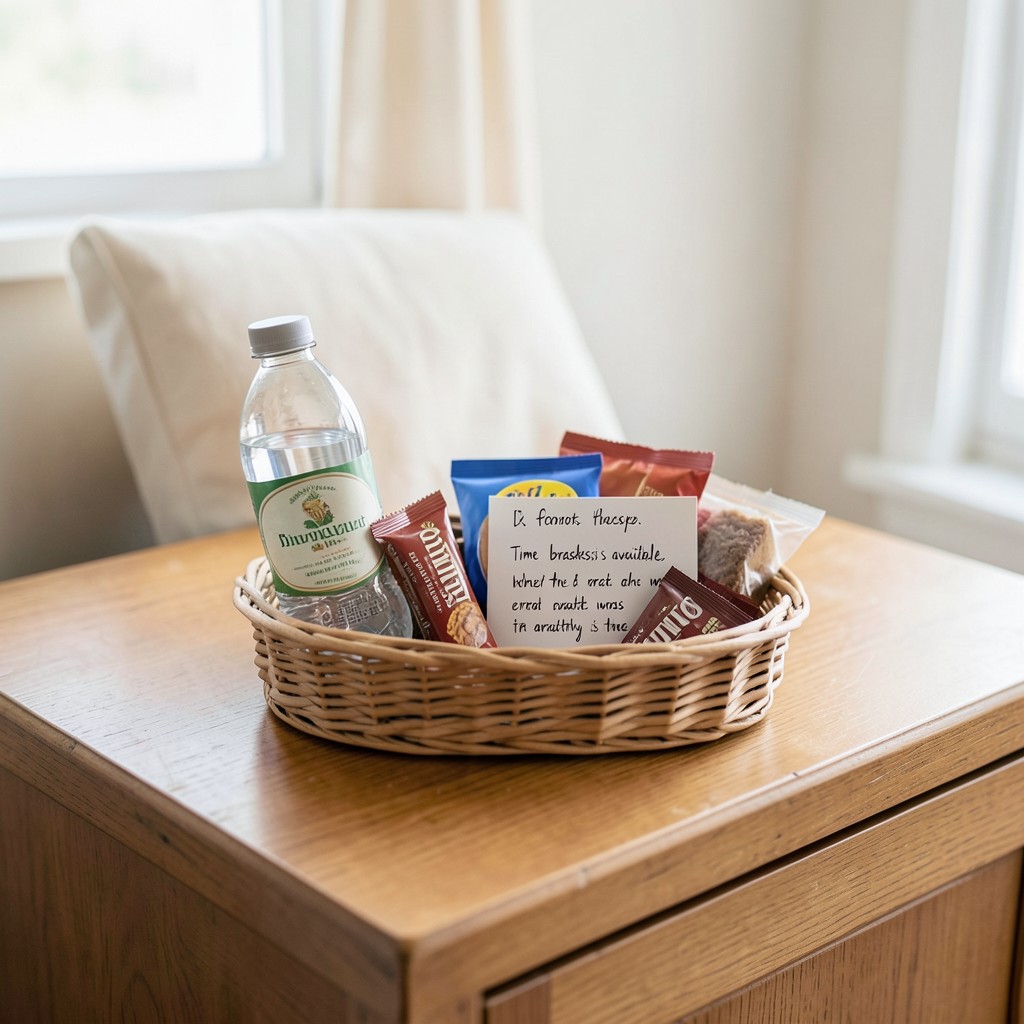
A small basket or tray of provisions placed on the dresser or bedside table before the guest arrives is the detail that transforms a prepared room into a welcomed arrival. The basket does not need to be elaborate or expensive — its purpose is not to impress but to communicate. It tells the guest that someone thought specifically about what they might want when they arrived, which is the definition of hospitality reduced to a physical object.
The contents of the welcome basket should address the specific moments of a guest’s first hours in the room rather than a general concept of hospitality. A bottle of water — not left over from someone else’s stay but a fresh bottle placed specifically for this arrival. A small bar of chocolate or a packet of something good to eat at the moment when the guest is settling in and dinner is still some time away. A card or a note — handwritten, brief — that says what time breakfast is available, where the extra blankets are, and how to reach the host if anything is needed. These items cost less collectively than a bunch of flowers and communicate more specifically that this arrival was anticipated.
The physical presentation of the basket matters enough to think about. A woven basket or a small wooden tray rather than a plastic bag or a supermarket carrier reads as considered. Contents arranged rather than dropped in. A small card that is handwritten rather than printed. None of this is fussy or time-consuming — it is the five-minute investment that changes the quality of the first impression from functional to warm. And the first impression is the one the guest builds their entire experience of the room around, which means those five minutes are the most high-leverage five minutes of guest room preparation available.
18. A Guest Room With a Reading Nook
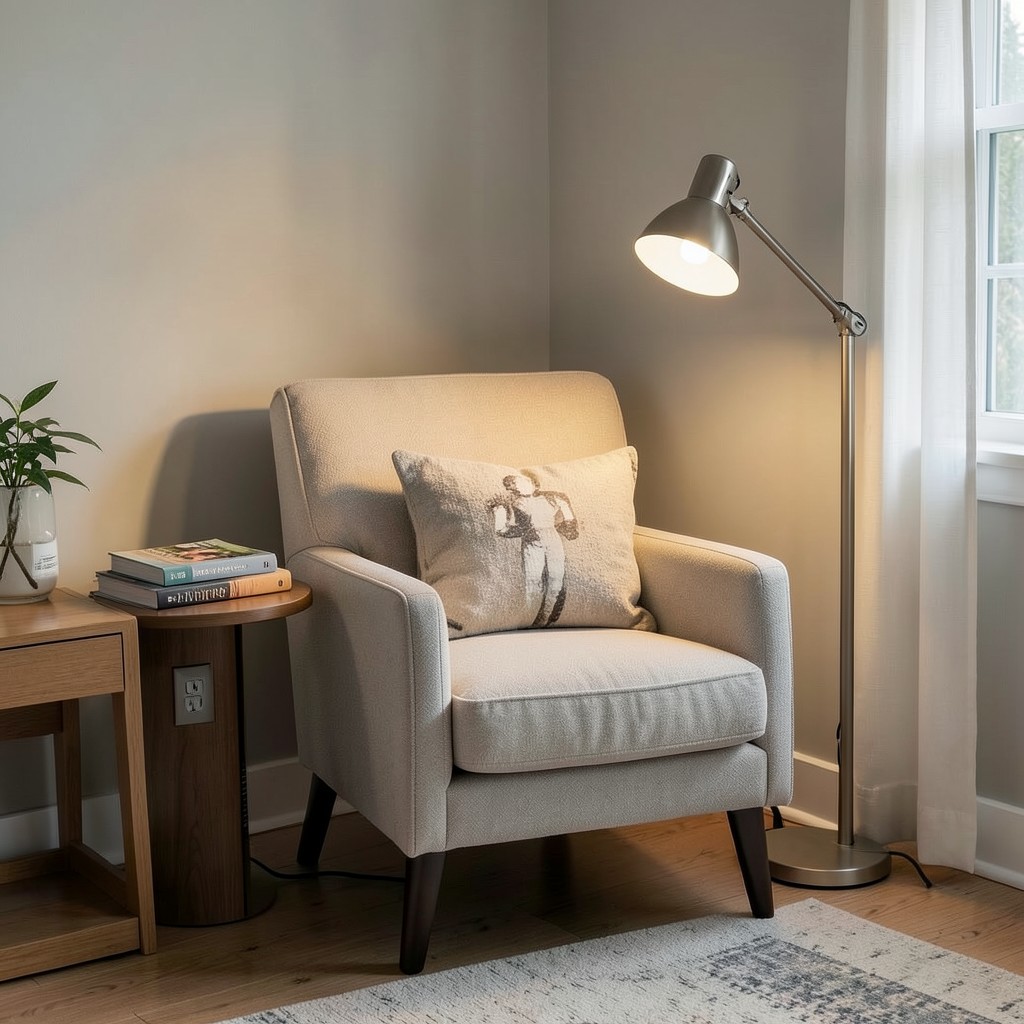
A reading nook in a guest room — a dedicated chair with a floor lamp, a small side table, and a few well-chosen books — gives the guest somewhere to be in the room that is not the bed. That distinction sounds minor until you have been a guest in a room without one and spent a long evening sitting propped up against pillows because there was nowhere else to sit. A chair with a light is not a luxury in a guest room. It is the difference between a room that accommodates a guest and one that genuinely hosts them.
The books in a guest room reading nook are a specific design decision with implications beyond decoration. A curated selection of five to eight books — a mix of fiction, photography or art books, and one or two local history or nature titles related to the area — gives the guest something to pick up on arrival and the reasonable expectation of finding something of genuine interest rather than a random assortment of books that were surplus to requirements elsewhere in the house. The books communicate taste. They communicate that the host considered what someone staying in the room might actually want to read. They invite the guest into a conversation about ideas and place before a single word has been exchanged.
The light beside the reading chair is the functional requirement that determines whether the reading nook gets used. A floor lamp with an adjustable shade or a directional reading light — one that can be aimed at the book rather than at the wall beside it — produces reading-quality illumination that makes the chair worth sitting in for an extended period. A lamp that produces sufficient ambient light but insufficient reading light is a lamp that makes the chair a place to sit but not a place to stay. Make the light good enough to read by for an hour without eye strain and the reading nook will be used on every visit.
19. A Guest Room With Personalized Touches

A guest room that contains one or two details chosen specifically for the person staying in it — a book by an author they mentioned in a recent conversation, a small print of a photograph from a place they both know, a plant that the host knows they find calming — crosses the line from a generally well-prepared room to a room that was prepared for this specific person. That level of specificity is the difference between hospitality that feels professional and hospitality that feels personal, and guests remember the latter for years.
The personalized detail does not need to be expensive or elaborate. A handwritten note that references something specific about the guest’s life — their recent travel, a book they recommended, a project they have been working on — placed on the bedside or the dresser communicates more personal attention than any material object could. The note is evidence of listening. It tells the guest that the host retained details of previous conversations and acted on them, which is the gesture that makes people feel genuinely known rather than merely received.
The risk of personalization is misjudging the specificity. A detail chosen based on an assumption about the guest’s preferences — a sports team print based on a half-remembered mention, a food product based on a dietary preference that may have changed — reads as slightly awkward when it misses. The safest personalized detail is one that is rooted in a shared history between host and guest rather than an inference about the guest’s individual preferences. A photograph from a trip you took together, a book related to a conversation you had recently, an object that references an inside reference — these are the personalized details that land without the risk of missing.
20. A Guest Room With Neutral Floors and Rich Textiles

A guest room where the floor is a neutral — pale timber, stone-colored tile, mid-grey carpet — and the richness comes entirely from the textiles has a layering quality that the reverse arrangement rarely achieves. A floor with significant pattern or color demands that the textiles compete with or defer to it, which complicates every subsequent furnishing decision. A neutral floor asks nothing of what sits on it and gives the textiles — the bedding, the curtains, the rug, the throw, the cushions — complete freedom to carry the room’s warmth and personality.
The rug is the first textile that defines the guest room’s spatial temperature. A wool or cotton rug in a warm tone — a terracotta Moroccan Beni Ourain, a kelim in earthy jewel tones, a simple flat-woven rug in natural undyed wool — makes the floor warm before the heating system is involved, which is a sensory quality that matters enormously in a guest room where the first physical experience is stepping out of bed onto the floor at whatever hour of the night necessity demands. Cold floors are memorable for the wrong reason, and a rug that covers the landing zone on each side of the bed solves this permanently.
The throw at the foot of the bed, the cushions arranged against the headboard, and the curtain fabric work together as a textile group that determines the room’s warmth or coolness far more than the wall color does. A warm linen duvet with a cashmere throw in a complementary tone and velvet cushions in a deeper accent color creates a bed that reads as deeply hospitable — dense with material comfort, communicating that the guest’s physical ease was the primary design consideration. That communication is made entirely through textile choices, and a neutral floor is what gives those choices the space to make it clearly.
21. A Guest Room With Integrated Technology
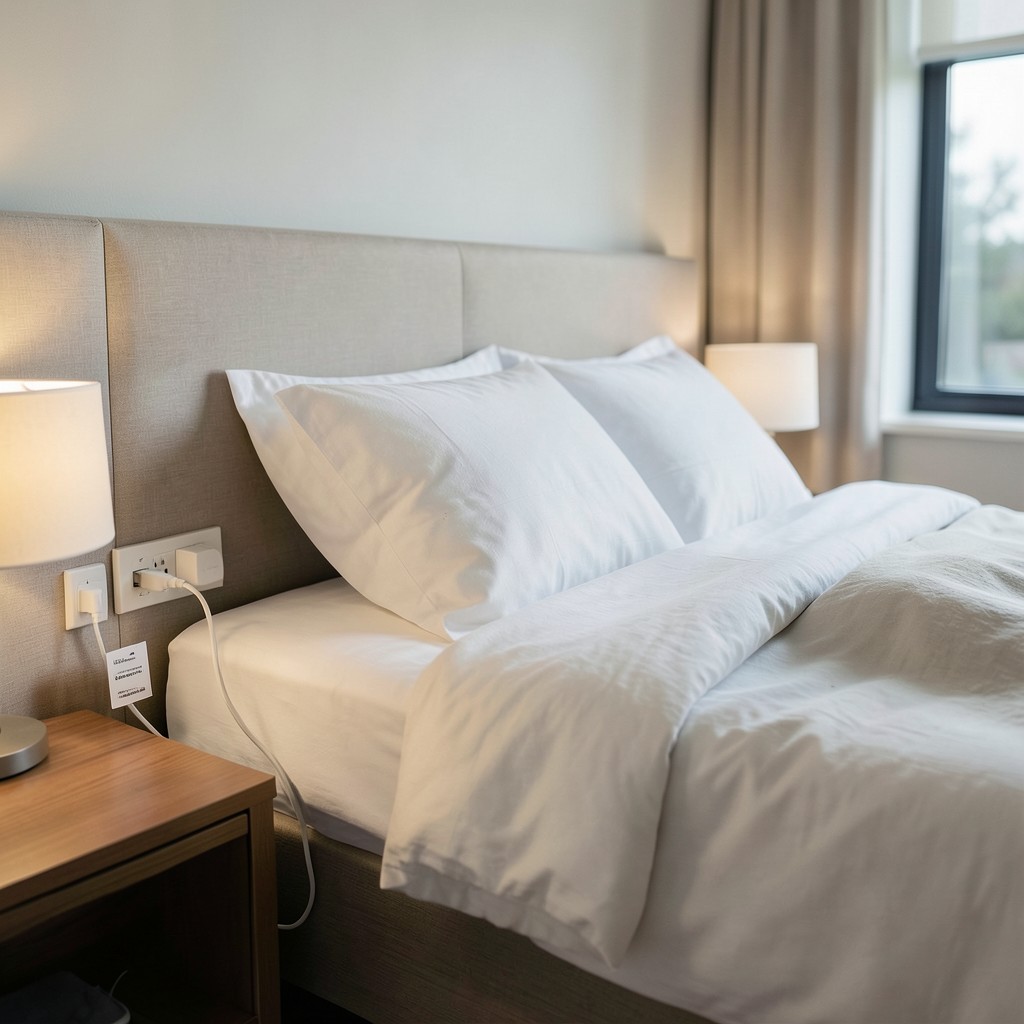
A guest room that addresses the technology expectations of a contemporary visitor — phone charging, reliable wifi, entertainment options, and adequate power provision — removes a category of friction that undermines the guest’s experience from the first hour. Nothing diminishes the impression of a beautifully designed room faster than a guest lying awake at midnight unable to charge their phone, searching for the wifi password on a sticky note somewhere, or running an extension lead from the single outlet across the floor to reach the bedside. These are solvable problems that cost almost nothing to address if they are planned for rather than discovered.
Power provision is the most practical starting point. A minimum of two outlets accessible from the bedside — one on each side for a shared room — is the baseline. USB-A and USB-C charging ports integrated into a bedside outlet strip eliminate the need for plug adaptors, which guests commonly forget and which produce the particular frustration of a device running out of charge on a trip when a charger is fifty miles away. The investment in a bedside outlet strip with integrated USB is modest and its daily utility to every guest is immediate and consistent.
The wifi provision for a guest room requires more than simply telling the guest the household password. A dedicated guest network — separated from the household’s primary network for security — with the credentials displayed on a small card in the room means the guest never has to ask, never needs to interrupt the host, and can get online the moment they arrive. The card should display the network name and password in clear, legible text, not in a decorative font that prioritizes style over the functional requirement of being read accurately the first time.
22. A Guest Room With a Private Entrance
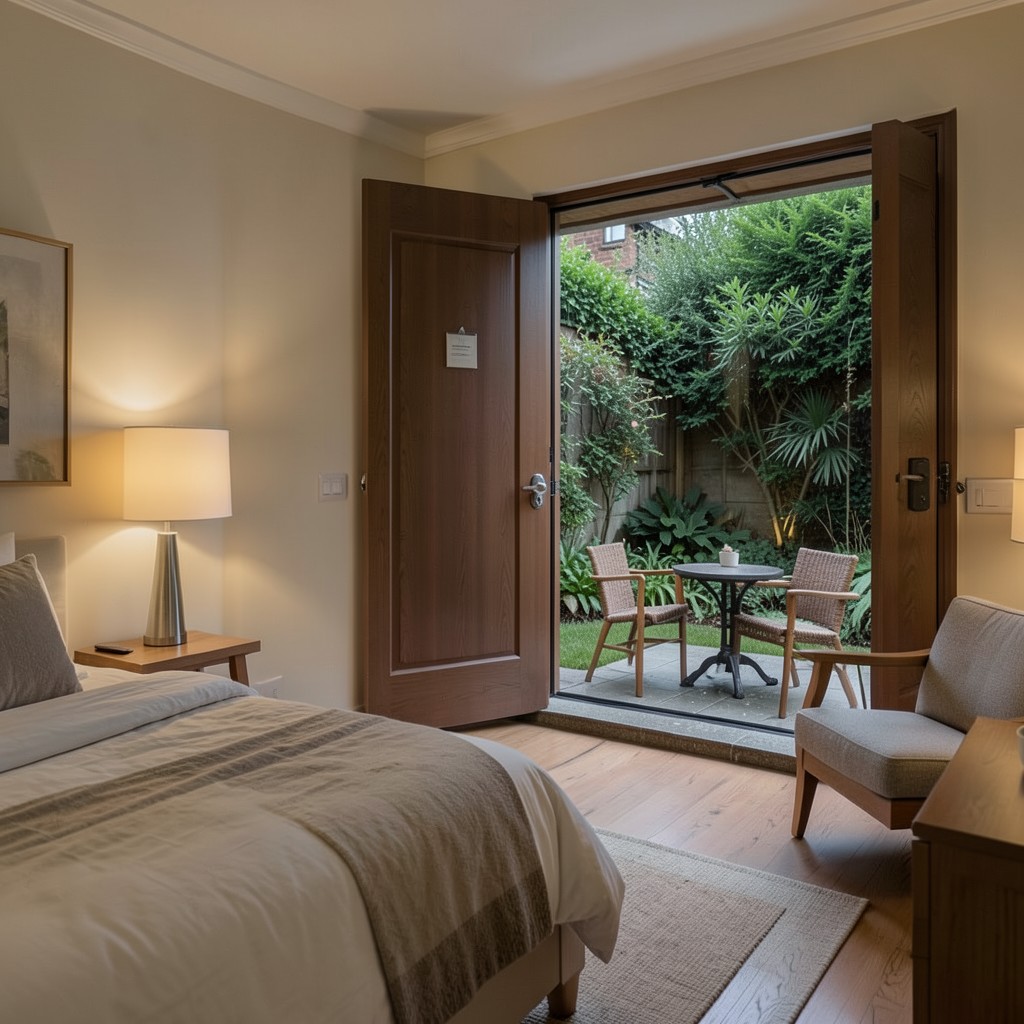
A guest room with its own entrance — either a direct external door to the garden or a side entrance separate from the main household door — gives the guest a degree of independence and privacy that transforms their experience from being hosted to being accommodated. The ability to come and go without moving through the household’s living spaces, to return late without disrupting the household, to leave early without waking anyone — these are the specific freedoms that make a guest room with a private entrance genuinely hospitable for extended stays.
The design of a private entrance for a guest room requires attention to security and weather protection that an internal door does not need. A deadlock on an external-facing door, a key that is clearly labelled and given to the guest on arrival along with a clear explanation of the locking mechanism, and a covered threshold that protects the door from rain while providing enough light for safe entry at night are the functional requirements. None of these are complex, but all of them must be addressed before the entrance is presented to the guest as usable.
The garden-facing private entrance has a secondary design benefit: it connects the guest room directly to the outdoor space in a way that makes the room feel larger and more connected to the wider property. A seating area — two chairs and a small table — positioned outside the guest entrance gives the guest a private outdoor space that belongs to their room rather than to the household’s shared garden. That outdoor extension of the guest room’s footprint is a hospitality gesture that guests who stay for more than a night appreciate far beyond its material cost.
23. A Guest Room That Doubles as a Meditation Space
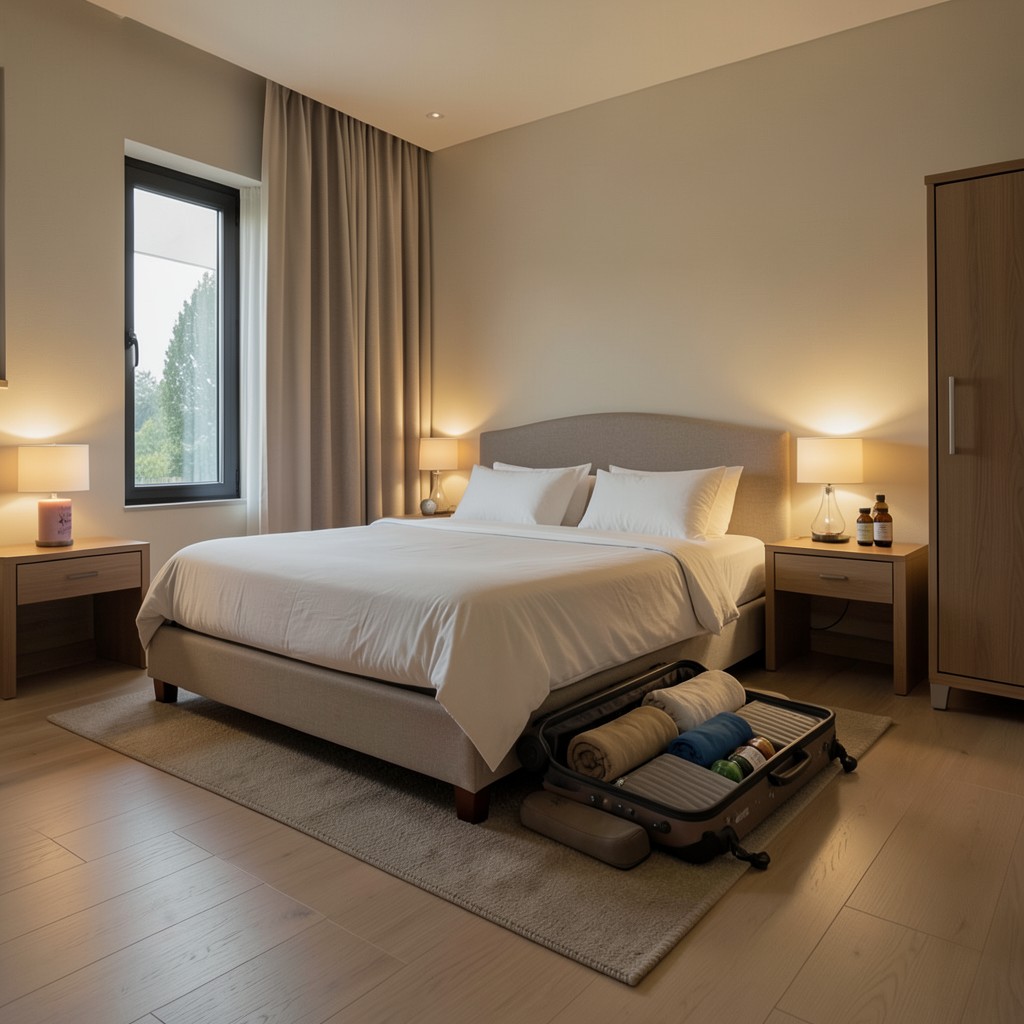
A guest room designed to support not just sleep but also the quiet practices that many guests maintain during travel — morning meditation, yoga, stretching, breathing exercises — provides a room with a quality of space that is genuinely restorative rather than merely adequate. The specific design requirements for a meditation-compatible room are simple: clear floor space free of furniture, a surface at low height for a candle or incense, and a quality of quiet — from acoustics, from light control, and from the absence of stimulating visual elements — that supports an inward mental state.
The floor clearance requirement is the most physically significant. A guest room with a bed, a wardrobe, two bedside tables, a chair, and a dresser may have insufficient clear floor area to lie down on a yoga mat without one end touching furniture. Planning the room’s layout with a deliberate clear zone — at minimum six feet by four feet of unobstructed floor — preserves this capability without requiring any additional furniture or equipment. The clear zone doubles as the space needed for the guest to fully open their suitcase on the floor when unpacking, which is a practical benefit that every guest uses regardless of whether they practice yoga.
The sensory quality of a meditation-compatible guest room is produced by the same material choices that produce a genuinely restful sleeping environment: warm-toned lighting on dimmers, sound-absorbing soft furnishings, a color palette that is neither stimulating nor entirely blank, and a scent in the room that is either neutral or specifically chosen for its calming quality. A small oil diffuser on the dresser with a selection of essential oils — lavender, sandalwood, cedarwood — gives the guest the option to create their own olfactory environment without imposing a scent on those who may not want one. That optionality is the right approach to any sensory provision in a guest room: offer it, do not impose it.
24. A Guest Room With Beautiful Natural Light
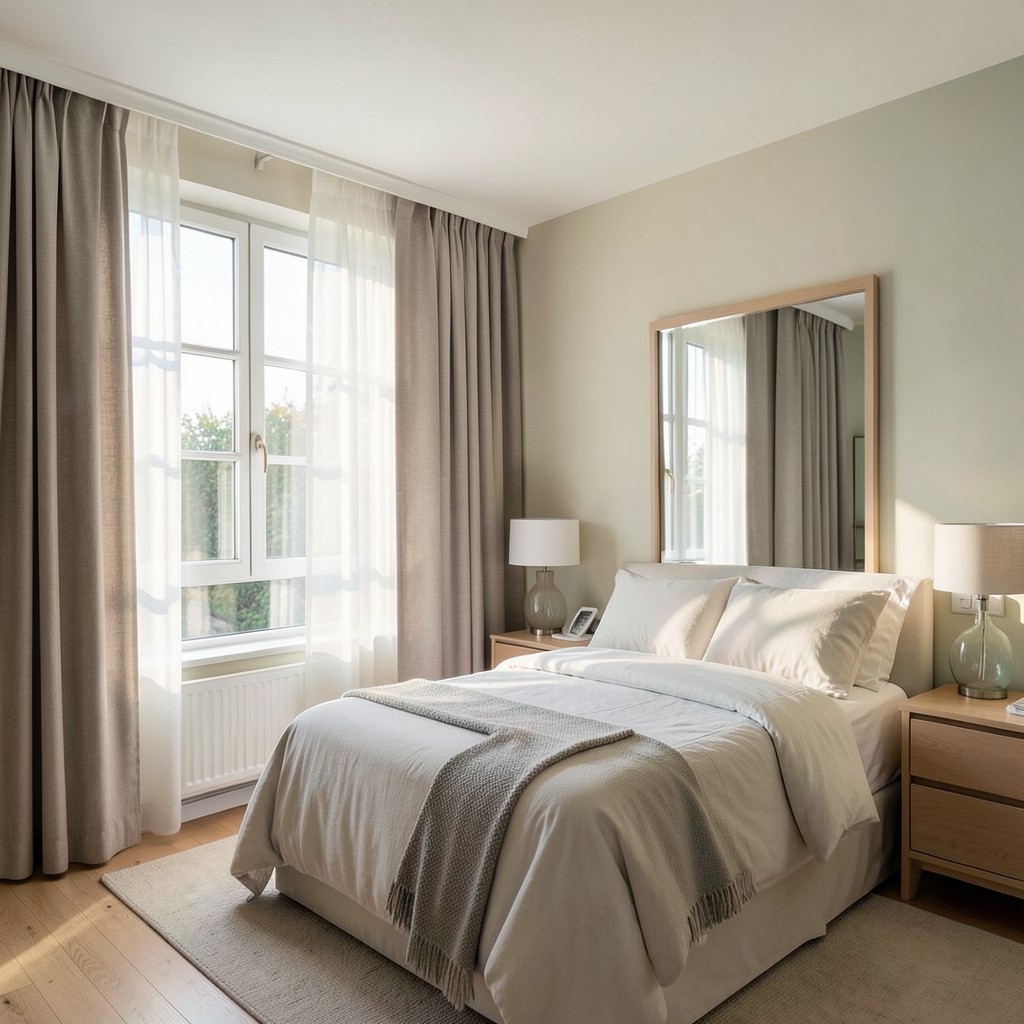
Natural light in a guest room is the quality that most determines how the room feels across the entire day rather than just at sleeping hour. A room with generous, well-considered natural light feels different in the morning than one with minimal light, and that difference shapes the guest’s experience of waking up in an unfamiliar place. A warm, bright morning in a well-lit room communicates welcome in a way that a dark, curtained room that requires artificial light to dress by simply cannot achieve.
Window placement and orientation determine the natural light’s character in ways that are fixed rather than adjustable. A south-facing guest room receives warm, bright light from mid-morning through the afternoon — the most generous and flattering natural light available. An east-facing room receives morning light that is particularly warm and soft, which is the light quality most associated with waking up in a pleasant environment. A north-facing room receives no direct sunlight at any hour, which produces flat, consistent light that neither glares nor warms. Understanding the room’s orientation is the starting point for every light-related decision: the curtain weight, the reflective surfaces, the mirror placement, the wall color.
For rooms with limited natural light, the design response is reflectance rather than resignation. A large mirror positioned to capture and redirect the available daylight — opposite the window, or at an angle that catches the light at its strongest point and throws it across the room — multiplies the impact of whatever light the window provides. Light wall colors with high reflectance — a warm white, a pale putty, a very light sage — bounce light around the room rather than absorbing it. Sheer curtains that allow maximum light during the day, with a separate blackout layer for sleep, give the room its full natural light potential during waking hours without sacrificing the darkness a guest needs to sleep.
25. A Guest Room With Scent as a Design Element

Scent in a room is the most immediate sensory impression and the one most tightly coupled with memory, which makes it the design element that guests remember longest even when they cannot consciously identify what they are remembering. A guest room that smells clean, freshly laundered, and gently scented with something warm and natural creates a first impression that no amount of beautiful furniture corrects if the room smells musty, artificial, or simply of nothing in particular. Scent is not a finishing touch — it is a foundational quality of the guest experience.
The primary scent management in a guest room is freshness: the bedding washed with a detergent that leaves a clean rather than heavily perfumed smell, the room aired before the guest arrives, the wardrobe interior smelling of cedarwood rather than the closed-room quality of long-unused storage. These are maintenance decisions rather than design ones, but they are the foundation upon which any additional scent layer is built. A beautiful fragrance applied to a room that has underlying staleness does not solve the staleness — it complicates it.
The added scent layer, if chosen, should be subtle and natural rather than strong and synthetic. A diffuser with a wooden reed in a cedarwood or sandalwood base oil, placed on the dresser at a distance from the sleeping position, produces a background warmth that the guest notices on entry and stops consciously registering within minutes. That transition — from conscious awareness of the scent to unconscious absorption of it — is the ideal operating condition for room fragrance. The scent becomes part of the room’s character without demanding attention, and months later the guest will find themselves in a shop smelling that oil and thinking, inexplicably, of the room they stayed in.
26. A Guest Room With a Writing Desk

A writing desk in a guest room — a surface at the correct height for seated work, with a chair that supports extended sitting, adequate light from the side rather than overhead, and a power outlet within reach — acknowledges that guests are frequently traveling for reasons that do not stop when they arrive. A business traveler who needs to work in the evening, a creative person maintaining a journal or a project, a writer who wants to sit with a coffee in the morning before the household wakes — all of these guests benefit from a desk that was designed for use rather than for appearance.
The height of the desk surface matters more than most furniture buyers account for. A desk at seventy-four to seventy-six centimeters with a chair whose seat height positions the forearms parallel to the surface produces a working position sustainable for two hours without shoulder or wrist strain. A surface too high creates shoulder elevation. One too low creates wrist bend. These are ergonomic specifics that most guest room desks ignore because they are specified for appearance rather than occupancy, and a guest who works at an incorrectly proportioned desk for three consecutive evenings during a week’s stay leaves with a physical memory of the stay that no beautiful bedding corrects.
The desk lamp is the functional detail that converts a desk from a surface into a working position. An adjustable desk lamp — one that can be directed at the work surface rather than fixed at a single angle — produces the directional, shadow-free light that reading and writing require. A lamp with a dimmer or multiple brightness settings allows the guest to adjust the light intensity for different tasks: bright for paperwork, lower for reading, minimal for working on a screen in a dark room. That range of control is what transforms a desk from a piece of furniture into a functional work position, and the difference between the two is the difference between a room that accommodates working guests and one that genuinely supports them.
27. A Guest Room With Layered Bedside Lighting

The bedside lighting in most guest rooms is a single table lamp — often chosen for its visual compatibility with the room’s design rather than its functionality as a reading light — that produces one level of brightness from one position. That single-mode bedside arrangement requires the guest to choose between light sufficient for reading and light sufficient for relaxing, with no option for the many states between those two extremes. Layering the bedside lighting across two or three sources on separate switches gives the guest the range of options that most homes provide only in their main bedroom.
A reading light positioned above and slightly behind the shoulder — either a wall-mounted swing-arm lamp or an adjustable desk lamp on the bedside table — provides directed, reading-quality illumination without the harsh top-down light that overhead fixtures produce. A separate ambient source at lower intensity — a small table lamp at a level below the shoulder, or a soft LED strip behind the headboard — provides the relaxed, atmospheric light that suits winding down without the brightness needed for a book. The guest switches between these two sources according to what they are doing, which is the operational autonomy that well-considered lighting design provides.
The switch arrangement for layered bedside lighting should allow the guest to control every light in the room from the bed without getting up. This sounds obvious and is consistently ignored. A room where the overhead light switch is at the door and the bedside lamp switch is beside the bed requires the guest to cross the room in the dark after turning off the overhead — a minor inconvenience that occurs every single night of the stay. A switched outlet at the bedside that controls the floor lamp in the corner, combined with a bedside switch for the overhead circuit, gives the guest full room control from where they lie, which is the specific convenience that makes a room feel as though it was designed with them in mind.
28. A Guest Room With a Botanical Theme

A guest room designed around botanicals — plants, pressed botanical artwork, botanical wallpaper, floral textiles in the right scale and tone — has a warmth and vitality that abstract or neutral design directions do not produce. The botanical theme works in a guest room specifically because it introduces the natural world in the gentlest possible way: no strong geometric energy, no bold color tension, nothing that stimulates the mind at the moment it needs to rest. Plants are the original calming presence in an enclosed space, and a room that draws on their visual and material language produces an environment that the body responds to as genuinely restorative.
The living plant component of a botanical guest room requires a practical consideration: the plants must not require daily attention, because a guest room is often unoccupied for weeks or months between visits. Succulents and cacti in a sunny window position survive weeks without watering. A pothos in a low-light corner forgives infrequent watering better than almost any other leafy plant. A ZZ plant is nearly indestructible in typical residential light conditions and adds genuine green presence to a room that receives only ambient rather than direct light. These are not the most visually dramatic plant choices, but they are the ones that will still be alive and healthy when the next guest arrives.
The botanical wallpaper that works in a guest room has two qualities that separate it from the version that overwhelms: a ground color that is calm rather than bright, and a pattern scale that suits the room’s ceiling height. Large-scale botanical illustration — oversized leaves, branching stems, generous space between elements — reads as expansive in a room with ceilings above nine feet and enveloping in a room with standard eight-foot ceilings. At the standard height, a medium-scale repeat with adequate negative space between the pattern elements is the version that enriches the room without contracting it.
29. A Guest Room With Vintage Furniture
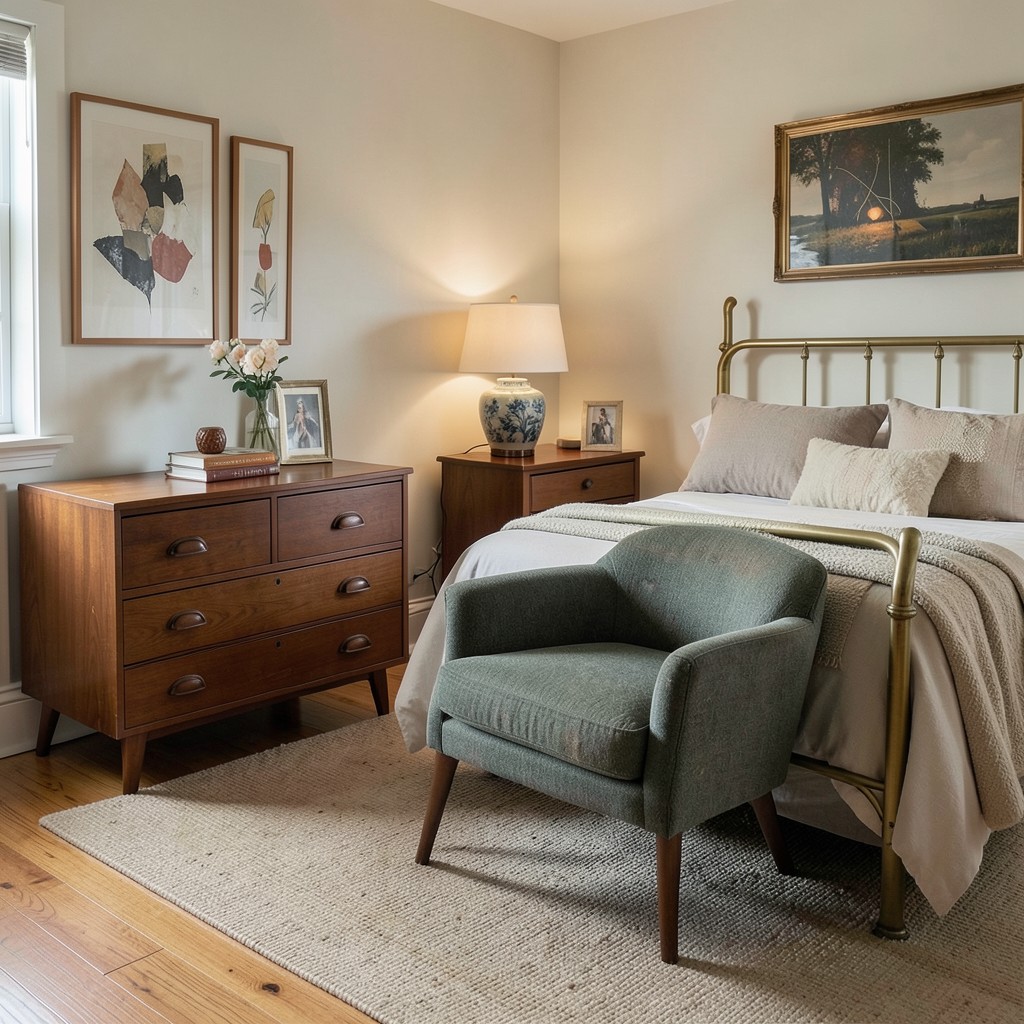
A guest room furnished with vintage pieces — a mid-century dresser, a brass-framed bed from a previous decade, a lamp with a ceramic base that carries forty years of glaze development — has a quality of character that new furniture at any price point does not replicate. Vintage furniture carries material history that is visible in its proportions, its patina, and the specific design intelligence of the period it came from. A guest room with a genuinely good vintage piece immediately reads as a room that was assembled by someone with knowledge and taste rather than one that was furnished from a single contemporary retailer’s catalog.
The selection of vintage pieces requires understanding which items age well in a guest room context and which do not. Solid wood furniture — dressers, bedside tables, small desks — ages excellently: the wood develops patina, small marks accumulate into character, and the proportions of well-made mid-century and pre-war pieces remain as spatially correct today as they were when designed. Upholstered vintage furniture is more complex: a re-upholstered vintage armchair with new fabric is a guest room asset; a vintage chair in its original upholstery, if that upholstery is worn or stained, reads as a furniture problem regardless of the chair’s form. Separate what is salvageable from what needs work before the piece enters the guest room.
The mix of vintage and contemporary in a guest room is where most design decisions succeed or fail. One or two vintage pieces in a room of contemporary furniture read as the most considered elements in the room — chosen rather than selected from a catalog, with a story rather than a product code. A room furnished entirely in vintage pieces requires a different quality of curation: the pieces must share a coherent material language, they must be in genuinely good condition, and they must have been assembled with the guest’s comfort — not the design’s aesthetics — as the primary selection criterion.
30. A Guest Room With Ceiling Detail
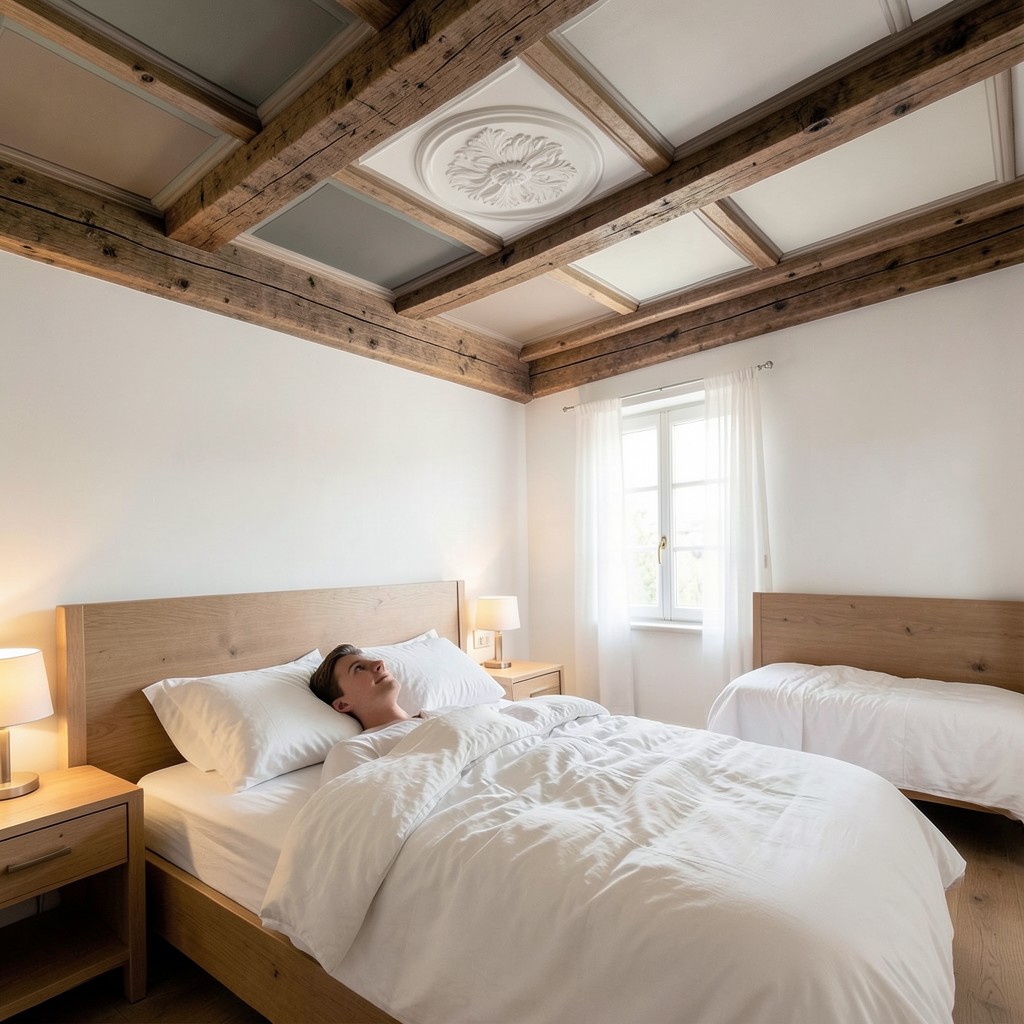
A ceiling treated with architectural interest in a guest room changes the experience of lying in the bed more than any wall or floor decision can, because the ceiling is precisely what the guest stares at in those minutes between wakefulness and sleep. A plain flat white overhead is a visual dead end. A ceiling with a coffered pattern, a painted accent color, exposed timber beams, or a plaster medallion gives the guest something worth looking at from a position that most of a room’s design never considers: flat on their back with eyes directed upward.
The painted ceiling is the most accessible version of this idea and the one that delivers the most immediate transformation relative to cost. A ceiling painted two shades deeper than the wall color — in the same color family, never a contrasting tone — produces an enveloping warmth that makes the room feel intentionally sheltered rather than simply enclosed. The guest registers the overhead color as comfort before they have consciously noted what changed, and that unconscious register is the quality that produces the response of feeling at ease in the room within minutes of lying down.
Exposed timber beams on a guest room ceiling — original structural beams left uncovered, or decorative beams added to a flat ceiling — introduce a material warmth and a visual rhythm overhead that painted surfaces do not generate. The beams divide the ceiling plane into sections and create a horizontal pattern that the eye reads as architectural rather than decorative. In a room with warm white walls and natural wood furniture, beams overhead complete the material language with something that reads as genuinely structural and genuinely considered simultaneously.
31. A Guest Room With a Monochromatic Palette

A guest room built entirely within one color family — all the tones derived from the same hue, from near-white at the lightest end to a deep saturated shade at the darkest — produces a room with an effortless sophistication that contrasting palettes rarely match. The monochromatic approach removes the decision of what colors to combine and replaces it with the decision of which tones, textures, and materials within a single family create the most interesting composition. That second decision is more nuanced and more interesting than the first, and the rooms it produces are more coherent.
Choosing the right hue for a monochromatic guest room requires understanding how the color behaves at multiple intensities under the specific light conditions of the room. A blue that reads as cool and fresh at its palest tone can read as melancholic at its deepest. A green that reads as sage and organic at low saturation can read as institutional at higher intensity. The way to test a monochromatic scheme before committing is to paint two or three tone swatches from the same color family on the actual wall and observe them across different times of day — the morning reading and the evening reading of the same color are sometimes dramatically different, and the guest room must work at both hours.
The texture variation within a monochromatic palette is the work that prevents the room from reading as flat or understudied. A wall in deep sage plaster beside a curtain in a softer sage linen beside a duvet in a barely-there sage cotton produces three greens in the same tonal family, each with a completely different surface quality, and the combination produces depth and richness that a single tone applied uniformly across all surfaces never achieves. Add a terracotta or brass accent — one deliberate contrasting element that exists as punctuation rather than competitor — and the monochromatic room suddenly has both coherence and tension.
32. A Guest Room With a Four-Poster Bed
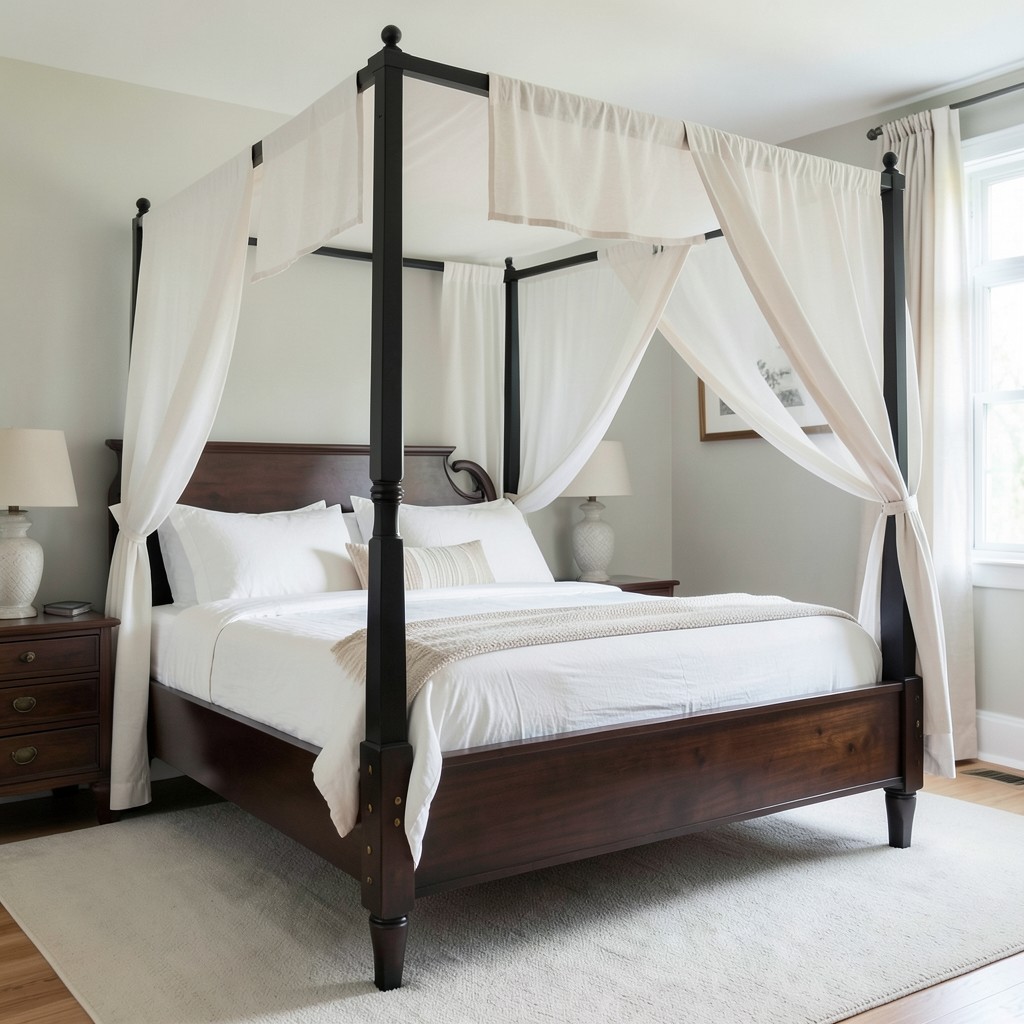
A four-poster bed in a guest room gives the sleeping space an architectural presence that no other bed format achieves. The four vertical posts rising from the bed frame create a room within the room — a designated sleeping zone defined by its own vertical elements rather than by the walls around it. Guests sleeping in a well-chosen four-poster feel the enclosure of the bed’s structure in a way that is psychologically distinct from sleeping in an open divan or platform bed. That sense of containment is not claustrophobia — it is the same quality of shelter that a canopy produces: intentional, warm, and specifically conducive to rest.
The material and finish of the four-poster frame sets the room’s entire design register. A painted white wooden four-poster with turned posts and a simple crossbeam at the top reads as light, airy, and slightly romantic — appropriate for a coastal, botanical, or French-country-influenced guest room where the bed is part of a soft, layered design direction. A dark, heavily grained mahogany or walnut four-poster with brass hardware reads as grounded and traditional — the right frame for a guest room with a formal or period-influenced design direction. A slender, minimal black steel four-poster reads as contemporary and architectural — correct for a guest room with clean lines, neutral tones, and minimal decorative elements.
The canopy treatment on a four-poster is the detail that moves the bed from furniture to experience. Drapes hung from the crossbars — sheer linen panels on each corner that gather toward the posts, creating a softly enclosed sleeping space — produce a bed that guests photograph before they even unpack. Swags of linen draped loosely over the top crossbeam, without any attached side panels, produce a lighter, more casual canopy that references the four-poster format without the full enclosure. Either approach requires fabric length calibrated to the ceiling height — panels that stop short of the floor look unresolved, and panels that pool generously look deliberate.
33. A Guest Room Designed for Children

A guest room designed specifically for younger guests — with a bed at a height that is genuinely safe for a child to climb in and out of, storage at a reachable level, and surfaces that can withstand the contact that children make with every available surface — is a more thoughtful gesture than placing a standard adult bed in the room and hoping for the best. Children experience rooms differently from adults: the floor is primary territory, the space under furniture is interesting, and the accessibility of every surface is directly related to the child’s height rather than the adult visitor’s.
The bed height for a child’s guest room matters more than most adult-focused designs acknowledge. A high adult bed is a genuine safety risk for a child who rolls in their sleep, and the anxiety this creates for the accompanying parents affects their own sleep in ways that defeat the room’s purpose. A low platform bed — or a standard single bed with a side rail installed for younger children — at a height where a child’s feet touch the floor before they step down entirely is the configuration that allows parents to sleep without concern. The bed can be beautiful and still be low. The two requirements are entirely compatible.
Play space and storage for toys in a child’s guest room communicates a degree of preparation that children register immediately and parents appreciate deeply. A basket of age-appropriate toys and books — rotated between visits to maintain the element of novelty — gives a child a reason to engage positively with the room from the first moment of arrival. A low shelf or a designated drawer at child height gives the small guest somewhere to put their own things, which produces the sense of ownership over the space that makes children settle more quickly in unfamiliar environments.
34. A Guest Room With Statement Wallpaper
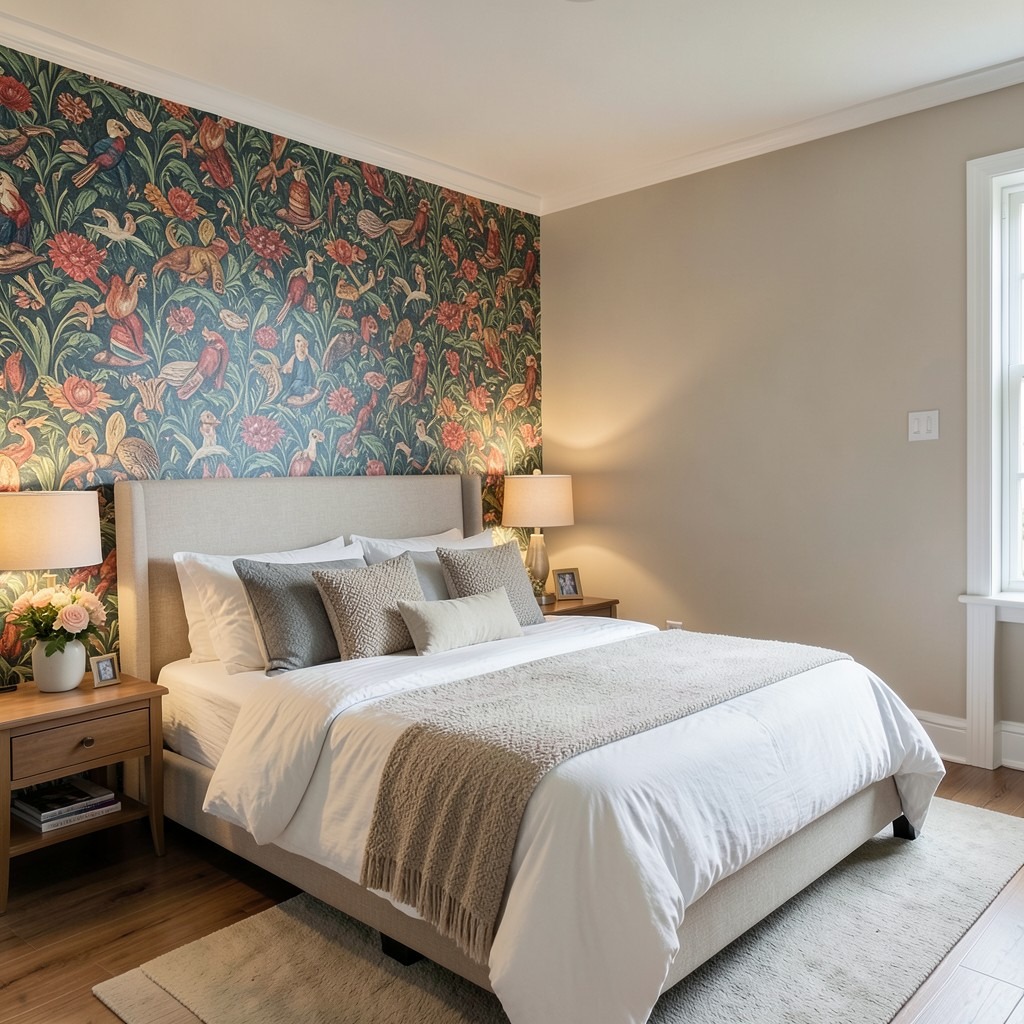
A guest room is the one room in the house where a statement wallpaper — a large-scale pattern, a hand-painted illustration, a richly colored print that would dominate a room used more continuously — can be applied without the risk of design fatigue that the same paper would create in a bedroom used daily. The guest occupies the room for days rather than years, which changes the calculus of pattern intensity entirely. What would become exhausting after three months of daily exposure is fresh and engaging for a three-night stay, and a wallpapered guest room is often the most commented-on room in the house by the people who sleep in it.
The decision of which walls to paper requires considering the room’s proportions and the paper’s pattern scale together. A large-scale repeat on all four walls of a small room produces a pattern so dense and surrounding that the room reads as smaller and more enclosed than it actually is. The same paper on a single wall behind the bed — used as a headboard wall in the way that a feature paint color would be — produces the pattern’s impact without the enclosure. In a larger room with more generous proportions, papering three walls and leaving the wall behind the headboard in a plain painted finish that pulls a color from the paper produces a more sophisticated result than four papered walls.
The quality of the paper affects the quality of the room more directly in a statement wallpaper context than in any other decorating application. A high-quality paper with dense pigment, accurate color register between pattern repeats, and a surface weight that hangs without bubbling or seaming obviously produces a result that reads as genuine and considered. A low-quality print on thin substrate, with slight color variation between rolls and visible seams, undermines the entire design investment regardless of how well the pattern was chosen. With statement wallpaper, quality is not an upgrade — it is the condition under which the idea works at all.
35. A Guest Room With an Ensuite Bathroom Connection

A guest room with a directly connected private bathroom removes the most significant daily friction of the guest experience: the shared or distant bathroom. Walking to a shared family bathroom in the middle of the night, waiting for an occupied bathroom in the morning, having to carry toiletry bags to a bathroom down the hall — these are the inconveniences that accumulate into the feeling of being an imposition rather than a guest. A private bathroom, directly connected to the guest room, eliminates all of these simultaneously.
The ensuite does not need to be large to function correctly for a guest’s needs. A compact shower room — shower, basin, toilet, and towel provision — in as little as thirty-five to forty square feet provides full bathing independence without requiring a major spatial investment. The design of a compact guest ensuite should prioritize the quality of the shower over floor area: a well-specified shower head with good water pressure and a reliable thermostat matters more to the daily experience than the overall size of the room. A cramped shower with excellent water pressure is a more enjoyable daily experience than a spacious shower with inadequate flow.
The connection between the guest room and its ensuite should be through a door that provides complete acoustic separation when closed. A solid-core door between sleeping and bathing spaces — rather than a hollow-core interior door that transmits sound from running water and extractor fans into the bedroom — ensures that an early-morning shower does not disturb a guest still sleeping. That acoustic consideration is typically an afterthought in ensuite design and a significant daily quality-of-life factor for any guest staying for more than one night.
36. A Guest Room With Warm Textile Layering
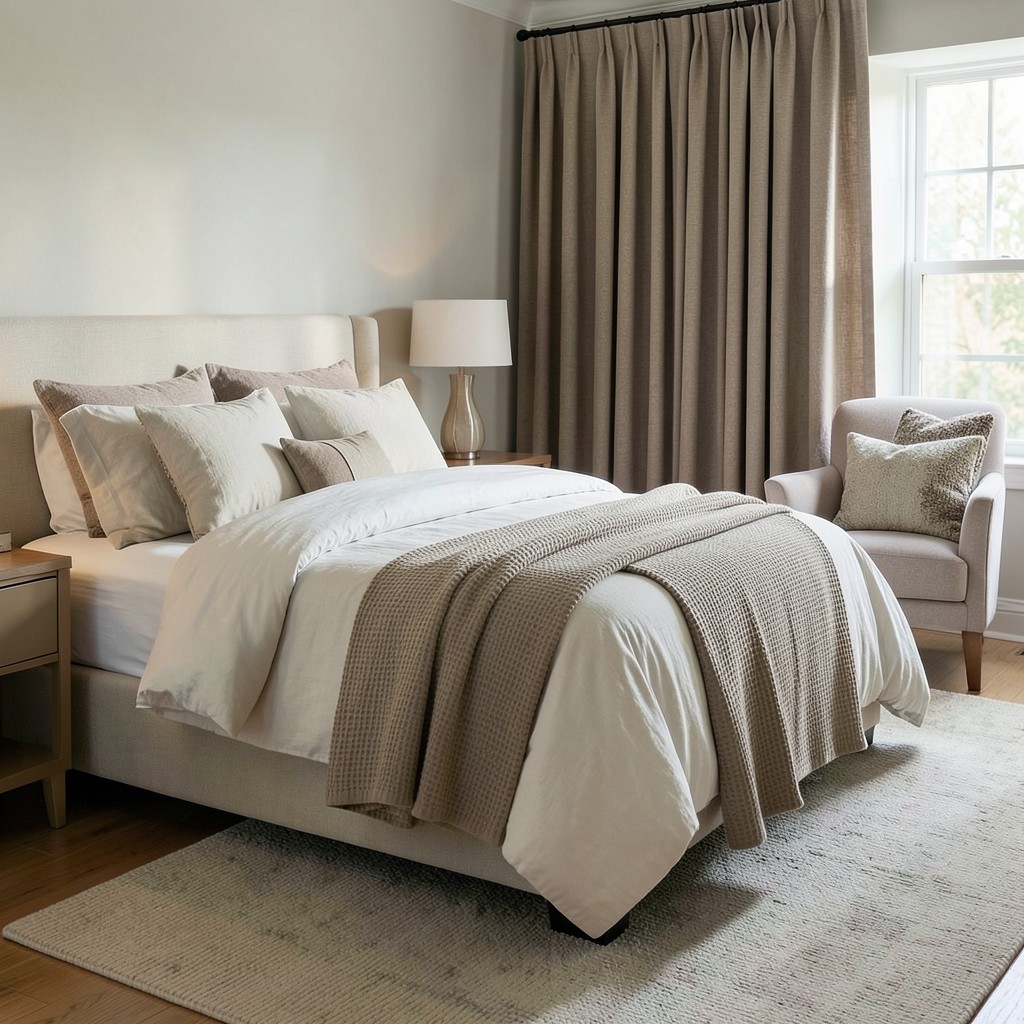
Textile layering in a guest room — building the room’s warmth through multiple layers of fabric at different weights, textures, and tones — produces a richness that hard furnishings alone cannot generate. A room with good furniture and minimal textiles reads as structured but cold. A room where the textiles have been chosen with the same care as the furniture reads as structured and warm, and that warmth is the quality that makes a guest feel genuinely welcomed rather than adequately accommodated.
The layering starts at the bed and works outward. A fitted sheet in smooth percale cotton, a flat sheet above it in softer washed linen, a duvet in a natural fiber fill, a waffle cotton blanket folded across the foot, and a merino wool throw draped over the corner of the bed — this is the full textile sequence of a bed assembled with material intelligence. Each layer serves a specific purpose: the fitted sheet for hygiene, the flat sheet for a lighter covering option, the duvet for warmth, the waffle blanket for the guest who runs warm, the throw for the guest who needs one more layer at three in the morning when the heating has cycled off.
Away from the bed, the textile layering extends to curtains heavy enough to drape generously rather than hang flat, a rug with pile depth sufficient to register underfoot as cushioned rather than merely present, and a cushion or two on the chair in the room that are upholstered in a fabric with genuine texture — a boucle, a woven linen, a velvet — rather than a printed cotton that looks good but feels indistinct. Textiles are the room’s sensory layer, and a guest room that has invested in them properly communicates through touch, temperature, and physical comfort in a way that wall color and lighting design cannot reach.
37. A Guest Room With a Private Garden View

A guest room positioned to overlook a private garden — with a window or a glazed door that connects the interior to the outside visually or physically — offers a quality of outlook that transforms the experience of waking up in an unfamiliar room. The first view of a new morning in a strange place matters psychologically, and a guest who opens their eyes to green — to a garden, a planted courtyard, or even a window box at sufficient scale — experiences a quality of gentle orientation that a view of a wall or an adjacent roof never provides.
The connection between a garden-view guest room and the outdoor space it overlooks deepens with a door rather than a window alone. A door that opens directly to the garden from the guest room gives the visitor a private outdoor territory for the duration of the stay: a morning cup of coffee outside before the household is awake, an afternoon reading in a garden chair, an evening walk without passing through the main living spaces. That outdoor freedom is a form of hospitality rarely offered in hotels at any price point, and in a home setting it transforms the quality of an extended stay.
The planting visible from a garden-view guest room deserves specific consideration. A garden that is beautiful at the distance it is viewed from the guest room window — with plants at a scale that reads clearly from a first-floor or ground-floor viewing position — is more valuable to the guest than a garden that is beautiful to walk through but reads as an indistinct green mass from the window. Planting taller structural elements — small trees, large shrubs, trained climbers on a wall — in the sightlines from the guest room window creates a layered view that rewards looking from the room.
38. A Guest Room With Handmade Ceramics

Handmade ceramics in a guest room — a thrown ceramic lamp base, a hand-built bedside water jug and cup, a ceramic tray on the dresser, a small sculptural piece on a shelf — introduce material individuality that mass-produced objects cannot replicate. Each handmade piece is singular. The throwing marks visible in the clay, the variation in the glaze where it pooled differently during firing, the slight asymmetry of a hand-built form — these are the qualities that make a ceramic object worth looking at and worth picking up, and a guest room with well-chosen handmade ceramics gives the visitor objects that reward attention throughout their stay.
The water jug and glass combination on the bedside is the handmade ceramic application with the highest daily utility in a guest room. A ceramic jug filled with fresh water and a matching ceramic glass — placed on the bedside at the start of the guest’s stay — communicates care through a specific physical provision that the guest encounters immediately and uses throughout the night. The object quality of a handmade jug communicates more attention than a plastic bottle of water from the supermarket, not because of cost but because of the specificity of the provision. Someone chose that jug. Someone chose that room to put it in.
The sourcing of handmade ceramics for a guest room is most effectively approached through local makers — potters working within the region who sell through studio sales, local markets, or their own direct channels. Ceramics sourced locally carry a provenance that connects the object to the place the guest is visiting, and a guest who notices and asks about a piece they admire on the bedside is given an instant connection to the local creative community. That conversation — about a potter, a studio, a market — is one of the small, specific hospitality moments that guests carry away with them.
39. A Guest Room With Adjustable Privacy
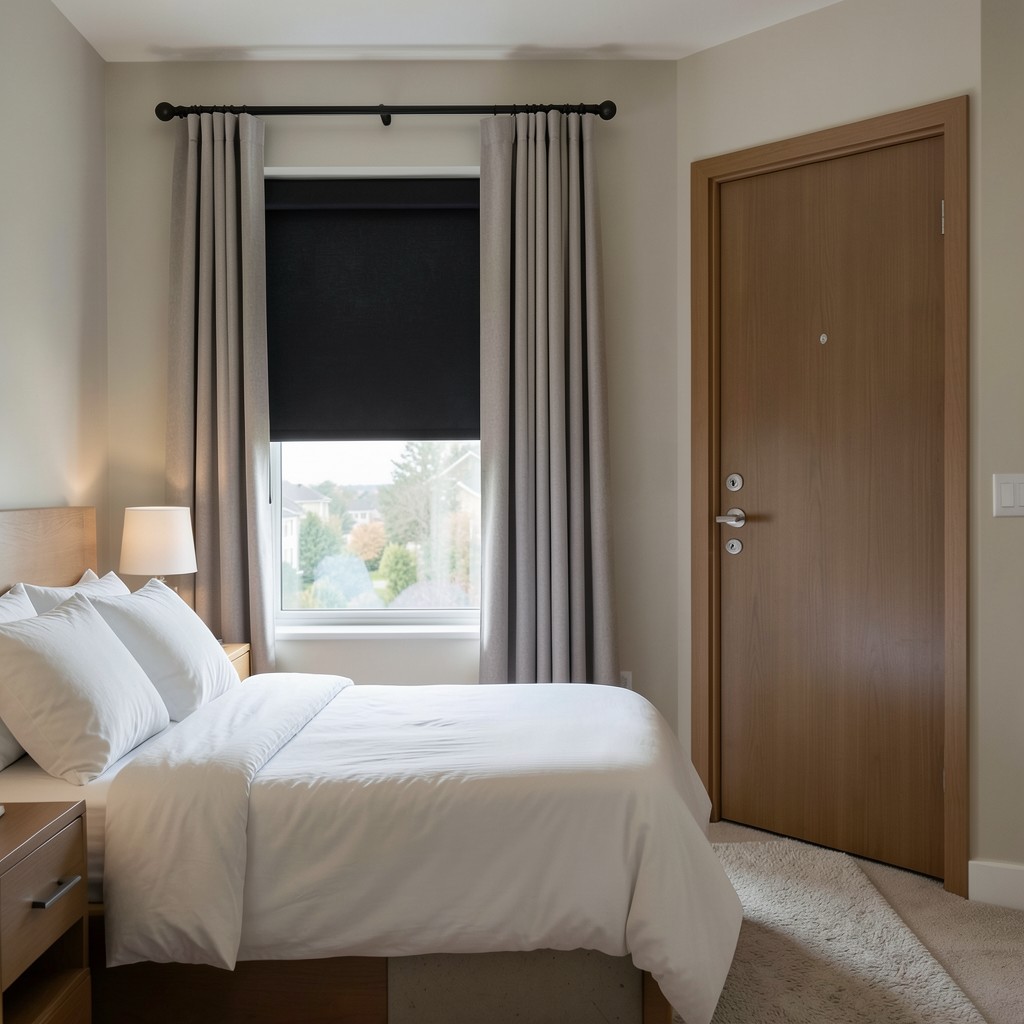
A guest room where the occupant has genuine control over their privacy — at the window, at the door, in the bathroom connection — is a guest room that treats the visitor as an autonomous person rather than a dependent one. Privacy control in a guest room is not just about window treatments; it is about the entire range of spatial and acoustic boundaries that separate the guest’s personal territory from the household’s shared spaces, and ensuring those boundaries can be set by the guest rather than predetermined by the design.
The window privacy system must allow the guest to move between full openness, filtered privacy, and complete seclusion without leaving the bed. A remote-controlled blackout blind — activated by a bedside switch or a phone app — provides this control without requiring the guest to move across the room. In its absence, a well-designed curtain track with smooth-running rings that can be pulled to a fully closed position from the center of the bed’s reach is the manual equivalent. The friction of a curtain that requires both hands and significant force to close is a small inconvenience that the guest manages every day and every night of their stay.
Door privacy in a guest room requires a lock — a simple thumb-turn lock on the inside of the guest room door that allows the visitor to secure their space without needing a key. This is a detail that many homes omit because it feels unnecessary within a household of trusted family members, but for a guest who does not know the household’s rhythms, the ability to lock their door is a fundamental sense of personal security rather than a statement of distrust. Providing it is the host’s job, and its absence produces a subtle but persistent awareness of exposure that the most beautiful room design cannot compensate for.
40. A Guest Room With Acoustic Comfort
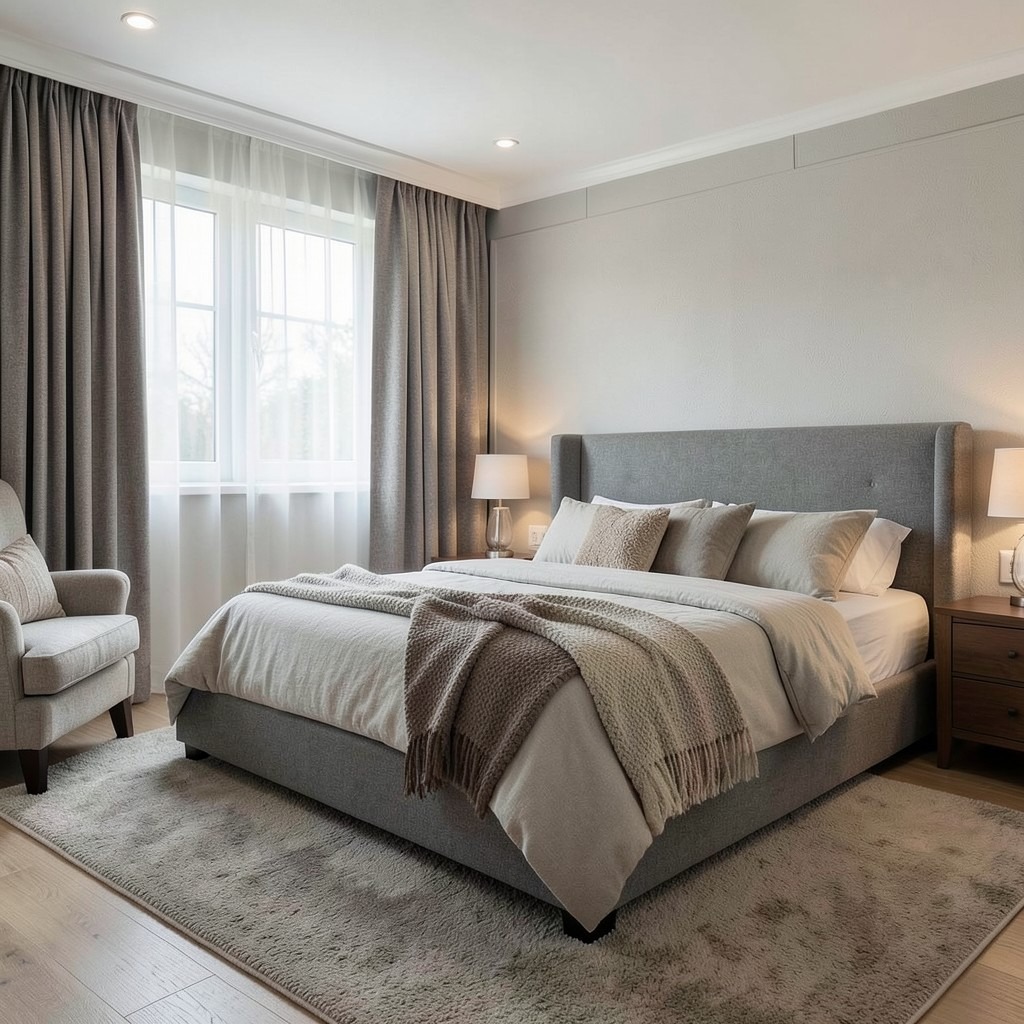
Sound is the sleep quality variable that most guest room designs ignore entirely, and it is often the one that most directly determines whether the guest sleeps well. A room that is beautiful, comfortable, and correctly lit but acoustically exposed to household noise — footsteps overhead, conversations through a thin wall, a television in the adjacent room, early-morning kitchen sounds — is a room where the guest sleeps badly in ways they may not be able to attribute accurately but feel clearly the following day. Acoustic comfort in a guest room is not a luxury refinement — it is a sleep quality fundamental.
The most effective acoustic improvement for a residential guest room does not require structural intervention. Soft furnishings are natural sound absorbers, and a room with a thick rug, heavy curtains, an upholstered headboard, and textiles layered on the bed is already significantly more acoustically damped than a bare room with hard floors and plain walls. The carpet or rug is the single highest-impact acoustic addition — the hard floor beneath a bed reflects sound back into the room at higher intensity, while a rug absorbs the high-frequency components that make sound feel intrusive.
Where the guest room shares a wall with a bathroom, a kitchen, or a living area, the acoustic performance of that shared wall is the design variable most worth addressing if the room is being renovated. A layer of acoustic plasterboard, an independent frame wall with a cavity, or even a well-stocked bookshelf against the party wall provides meaningful attenuation without requiring major structural work. These are not complex building operations — they are the acoustic equivalent of insulation, and treating them with the same design priority as thermal insulation produces a guest room that is genuinely restful rather than one that depends on the rest of the household being quiet to function correctly.
41. A Guest Room With a Canopy Above the Bed
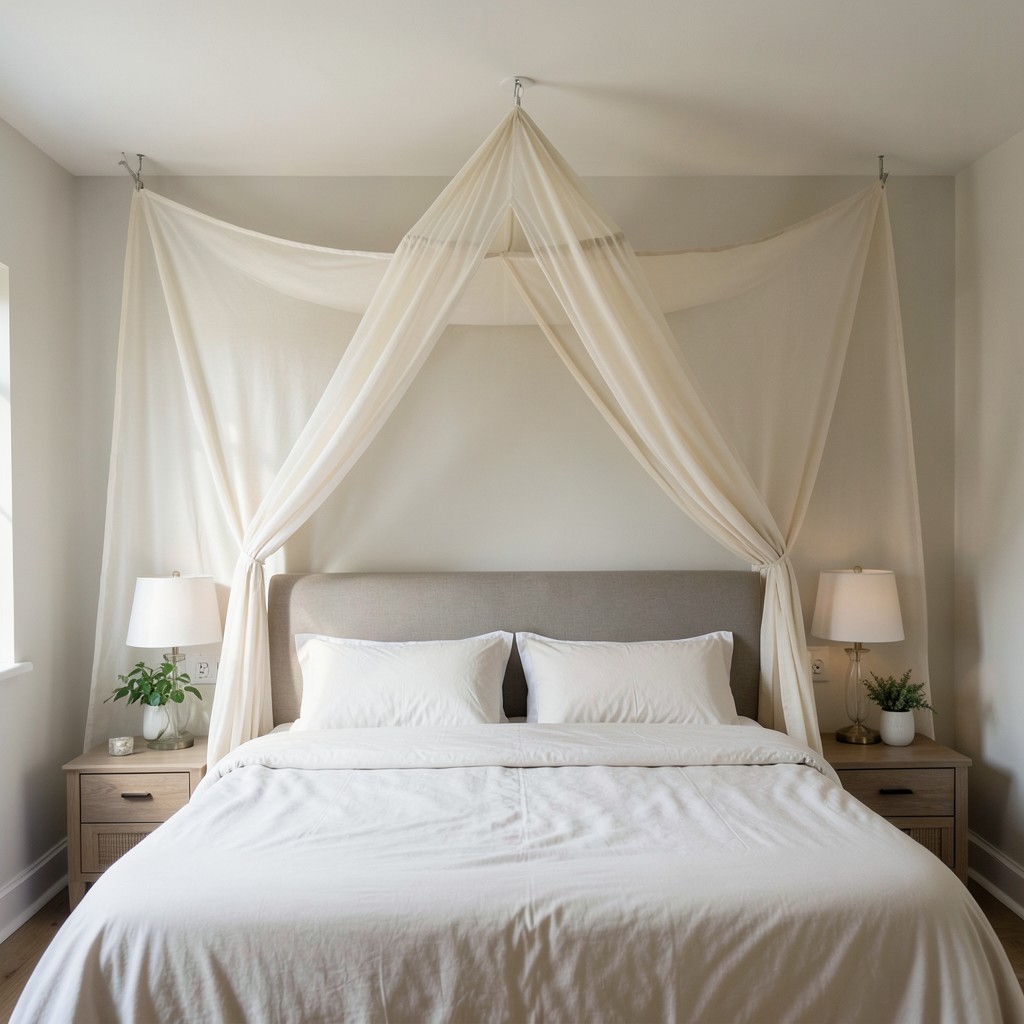
A fabric canopy suspended above the bed — either from a ceiling hook at a single point, from a wall-mounted rod that extends over the sleeping surface, or from a dedicated canopy frame — gives the guest a sleeping environment with a quality of shelter and enclosure that most bedrooms lack entirely. The canopy does not need to be a formal four-poster structure to produce this effect. A simple length of sheer linen gathered at a single ceiling hook above the center of the bed and allowed to fall to each side of the headboard produces an arrangement that reads as romantic, considered, and architecturally interesting in equal measure.
The fabric choice for a canopy determines the quality of light and atmosphere within the sleeping zone. A sheer linen or muslin canopy allows morning light to filter through the fabric before reaching the sleeping face, which produces a gentle diffused brightness rather than the direct light of an uncovered window. A heavier cotton or velvet canopy blocks light and creates a genuinely dark inner sleeping space — which suits guests who are sensitive to morning light or who are staying during long summer days when dawn comes early. The choice between sheer and opaque is the choice between atmosphere and function, and some canopy treatments manage both by using a sheer outer layer with a slightly denser inner lining.
The installation of a canopy requires attention to the ceiling’s load capacity and finish. A single gathered canopy on a ceiling hook requires minimal structural support — a standard ceiling hook rated for three to five kilograms handles the weight of any fabric at this scale. A rod-and-rail system requires two ceiling fixings spaced at the bed width, which must be anchored into ceiling joists rather than into plasterboard alone. Getting this wrong produces a canopy that sags between its mounting points and reads as a failed installation rather than a design feature. Take ten minutes to locate the joists before drilling and the canopy stays exactly as it was hung.
42. A Guest Room With a Fragrant Garden Planting
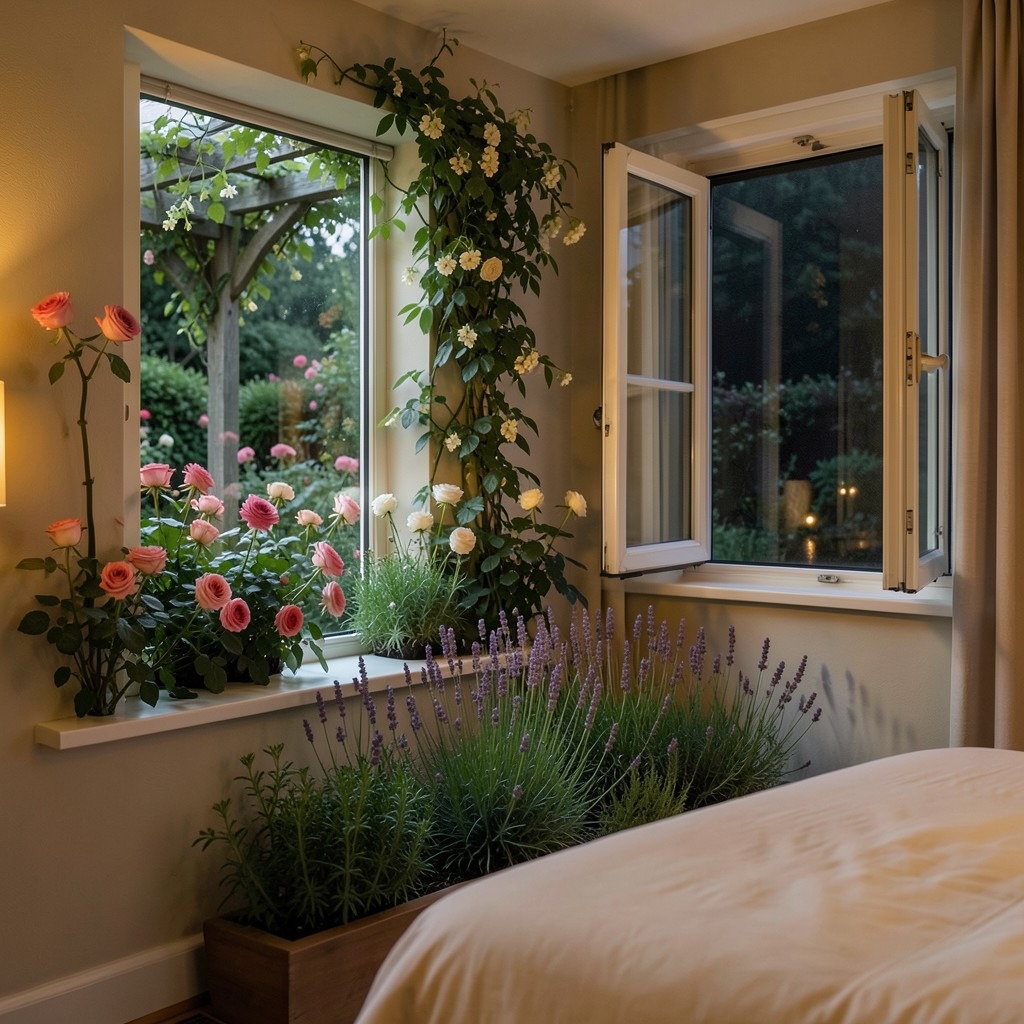
A guest room with a window that opens to fragrant garden planting — roses, jasmine, lavender, sweet-smelling herbs — provides a scent experience that no indoor diffuser or candle achieves. The scent of living plants carried on outdoor air through an open window is one of the most powerful environmental pleasures available in a residential setting, and it is also one of the most completely free. The garden does the work. The room receives the benefit. The guest wakes to a smell that connects them to the natural world before they have opened their eyes fully, and that connection is the best possible first moment of a new morning in an unfamiliar place.
The selection of fragrant plants for the planting outside a guest room window follows two criteria: the height at which the scent is produced must be at or above the windowsill, and the fragrance must peak at the hours when the guest is most likely to have the window open. Roses placed at window height against a supporting wall produce scent at nose level from the first moment of the window being opened in the morning. Jasmine trained over a pergola or trellis beside the window produces its most intense fragrance in the evening and at night, which suits a guest room used in the later hours rather than the early morning. Lavender in a bed directly beneath the window produces scent when the plant is disturbed by wind — a reliable evening fragrance in a breeze.
The fragrance from outdoor planting only reaches the guest room when the window is open, which is a design condition rather than an accident. A window that is difficult to open, that has no fly screen to allow it to remain open through the night, or that faces directly onto a noise source that makes open-window sleeping impractical defeats the purpose of the planting entirely. Pair the fragrant garden planting with an operable window that can be left open through a warm night with a fly screen securing it, and the guest room becomes one of those rare spaces that delivers something a hotel room genuinely cannot.
43. A Guest Room With Generous Mirror Placement
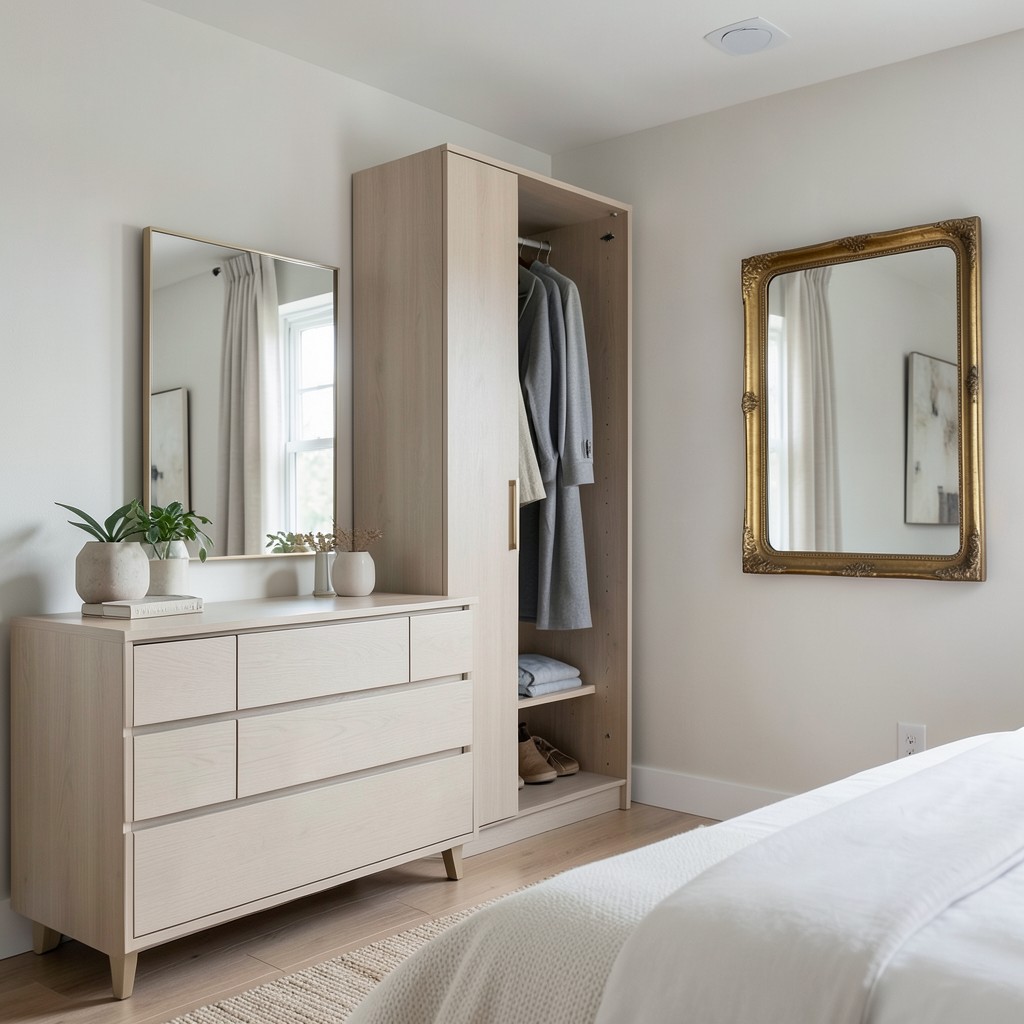
Mirrors in a guest room serve two distinct purposes that most rooms address with a single poorly placed mirror: the functional mirror for getting dressed and checking appearance, and the spatial mirror that makes the room feel larger by reflecting light and depth back into the space. A single small mirror above the dresser serves neither purpose well — it is too small for a full dressing view and too positioned to add meaningful spatial depth. Addressing the two functions separately, with a full-length mirror for dressing and a larger decorative mirror for spatial reflection, produces a room that works better both practically and visually.
A full-length mirror on the back of the wardrobe door is the space-efficient solution that serves the guest without requiring any additional floor area or wall space. The mirror is available every time the wardrobe is opened — which is every time the guest reaches for a garment — and it is the correct size for a complete head-to-toe view, which is the only mirror assessment that produces reliable dressing decisions. A mirror that cuts off at the waist tells the guest nothing useful about the lower half of what they are wearing, and most small guest room mirrors do exactly this.
A decorative wall mirror — larger than a functional mirror, positioned opposite or adjacent to the window — amplifies the room’s light and makes the space read as more generous than its actual dimensions. An antique mirror with a slightly foxed surface in a warm gilt frame is the decorative version that adds material character alongside spatial function. A large simple mirror in a minimal frame reads as architectural rather than decorative and suits guest rooms with a more contemporary design direction. Both serve the spatial function equally well — the choice is purely about which aesthetic belongs in the room.
44. A Guest Room With Thoughtful Bedside Provisions

The provisions on the bedside table in a guest room tell the visitor exactly how much thought went into their stay before they arrived. An empty bedside with a lamp and nothing else says the room was furnished rather than prepared. A bedside with a glass of water, a small dish of ear plugs, a folded note with the wifi password and breakfast time, and a single fresh flower in a bud vase says someone thought about what you would need at the specific moment of getting into bed, and acted on that thought before you arrived.
The ear plug provision is the detail that most hospitality professionals include and most private hosts never think of. Guests in an unfamiliar house do not know which sounds to filter out — the boiler clicking on at five, the neighbor’s car starting, the rain on a thin roof, the family dog moving around downstairs. Ear plugs on the bedside say: we thought about the sounds you might not be used to, and we wanted you to be able to sleep through them. That consideration for an unfamiliar sleeper’s specific vulnerability is the kind of hospitality that produces the feeling of being genuinely looked after.
A small notebook and pen on the bedside is the provision that most guests use more than they expect to. The ideas that come in the moments before sleep and the ones that interrupt it are often the important ones, and a guest who wakes at two in the morning with a thought they do not want to lose and has no means to record it will either lie awake trying to memorize it or reach for their phone, which activates the screen brightness and the notification ecosystem that disrupts sleep entirely. A notebook eliminates that problem. It costs pennies and communicates a level of thoughtfulness that guests remember specifically.
45. A Guest Room With a Personal Library Corner
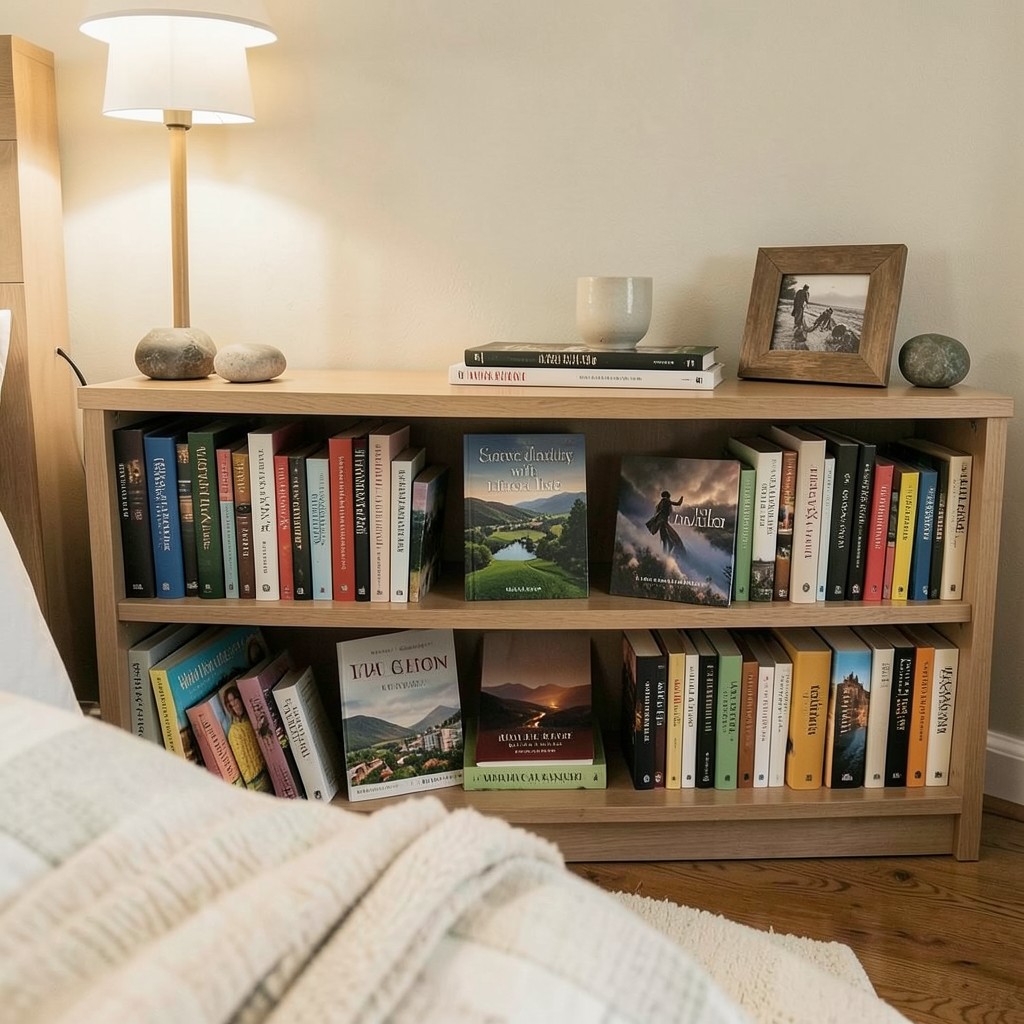
A shelf or a low bookcase in a guest room — five to ten books carefully chosen from the household’s collection or bought specifically for the room — gives the space an intellectual warmth that empty walls and decorative objects alone do not provide. Books communicate personality, taste, and the sense that the room was assembled by someone with interior life rather than assembled from a visual concept. A guest who wanders the room on arrival and finds a shelf of books — real books, chosen books, not generic paperback fillers — has an immediate and genuine point of engagement with the space.
The selection criteria for a guest room library should favor breadth over depth within a single subject. A mix of fiction, travel writing, a photography or art book, and one or two titles related to the local area covers the reading preferences of most visitors more effectively than a shelf composed entirely of one genre. The local area book is particularly valuable — a history of the town, a walking guide to the surrounding landscape, a book about the region’s food or architecture — because it connects the guest to where they are staying in a way that no other provision achieves. A guest who picks up a local history book on the first evening and reads twenty pages learns something about the place they are in that no tourist information leaflet would have offered.
The physical arrangement of the books matters for whether the shelf reads as considered or haphazard. Books sorted loosely by subject, standing upright with one or two laid horizontally to create visual variation, with a small object placed at each end — a ceramic piece, a smooth stone, a small framed photograph — reads as assembled with care. Books crammed sideways, mixed with random objects that have no relationship to each other, reads as a shelf that happened rather than one that was made. The arrangement takes five minutes. The difference in how the room reads is disproportionate to that investment.
46. A Guest Room With Window Seat Storage

A window seat built into the bay or alcove of a guest room window — with a padded surface for sitting and a hinged lid that opens to reveal storage below — is the kind of architectural detail that makes a room feel genuinely designed at its bones rather than furnished after the fact. The window seat provides seating that requires no additional floor area, storage that uses a volume of space that would otherwise be structural dead space, and a position in the room that is architecturally defined and naturally lit — the best reading or sitting spot the room contains.
The construction of a window seat requires the bay or recess to have sufficient depth — a minimum of sixteen inches from wall to window sill — to produce a seating surface deep enough to be comfortable. Shallower recesses can accommodate a window ledge with a pad but not a seated position where the occupant can lean back against cushions. The storage below the seat is accessed through a gas-lift lid — the type used in storage ottomans — which holds the seat open while the contents are accessed without requiring a separate prop. The lid’s hinge position determines whether the full interior depth is accessible when opened, and a back-hinged lid provides better access than a front-hinged one in most window seat configurations.
The cushion and back pillow arrangement on the window seat is the detail that converts a built-in architectural element into a genuinely comfortable seating position. A seat cushion in a durable upholstery fabric — a printed cotton, a woven linen, a water-resistant outdoor fabric that handles the sun exposure of a window-facing position — at a minimum thickness of three inches provides adequate cushioning for an hour of seated reading. Back cushions in a complementary fabric against the side walls or a bolster against the window frame give the occupant the support for a longer occupancy. Without adequate back support, the window seat is used briefly and then vacated.
47. A Guest Room With Layered Rugs

Two rugs layered in a guest room — a larger, flat-woven or lower-pile rug as the base layer and a smaller, more textural rug placed over it at the bedside or in the sitting area — produce a floor composition with far more material richness than a single rug of any quality achieves. The layering creates visual depth at floor level that draws the eye down and gives the room a quality of considered composition that extends to every surface rather than stopping at the walls. It is also the most flexible approach to rug selection in a room where the perfect single rug at the correct size does not exist or does not fit the budget.
The base rug in a layered arrangement should be large enough to extend beyond the bed perimeter on three sides — past each bedside and across the foot of the bed — which anchors the bed within a defined floor zone. A flat-woven rug at this scale, in a neutral tone that reads as a warm floor rather than a pattern, serves as the platform on which the upper layer sits. Jute, sisal, or a flat-woven cotton in a natural or warm pale tone handles the base layer role without competing with the upper rug for visual attention.
The upper rug in a layered arrangement is where the character and the personality of the floor composition live. A small Moroccan Beni Ourain with its white ground and hand-knotted geometric pattern placed over a jute base produces a floor with genuine material depth and handcraft quality. A vintage kilim at the bedside over a plain base layer introduces color and history in a concentrated zone that the guest steps onto every time they get out of bed. The upper rug should be smaller than the base by at least thirty percent on each side, and placed deliberately rather than centered — a slightly off-center upper rug reads as styled, while a centered one reads as uncertain.
48. A Guest Room With a Full-Length Dressing Mirror

A full-length mirror in a guest room is not an optional accessory — it is a functional requirement that guests notice instantly when it is missing. The absence of a full-length mirror forces guests to assess their appearance from whatever partial view the bathroom mirror over the sink provides, which gives no reliable information below the chest. Getting dressed in a room without a full-length mirror and then feeling self-conscious about the result when the guest joins the household for breakfast — because they had no means to check — is a small but genuine failure of the room’s preparation.
The position of the full-length mirror determines whether it serves its primary dressing function or reads as a decorative element. A mirror positioned beside the wardrobe — within arm’s reach of the hanging clothes — allows the guest to hold a garment against themselves while checking the combination against the mirror before putting it on. A mirror placed on the opposite wall from the wardrobe, however beautifully it reflects the room and its light, requires the guest to carry garments across the room to use it, which produces a different level of convenience. Functional placement and aesthetic placement are sometimes the same; when they are not, functional placement wins in a room whose primary purpose is the comfort of the person using it.
The frame of the full-length mirror should belong to the room’s design language rather than looking as though it was moved from another room and parked there. A wardrobe-door installation — a full-length mirror adhered to the interior or exterior of the wardrobe door — is the most spatially efficient option and reads as built-in rather than added. A leaning mirror in a simple frame, propped against the wall at a slight angle, reads as intentionally placed and suits rooms with a more relaxed, informal design direction. A framed mirror fixed to the wall in a decorative frame reads as the most formal option and suits guest rooms with a more traditional or composed aesthetic.
49. A Guest Room With Fresh Flowers or Living Plants
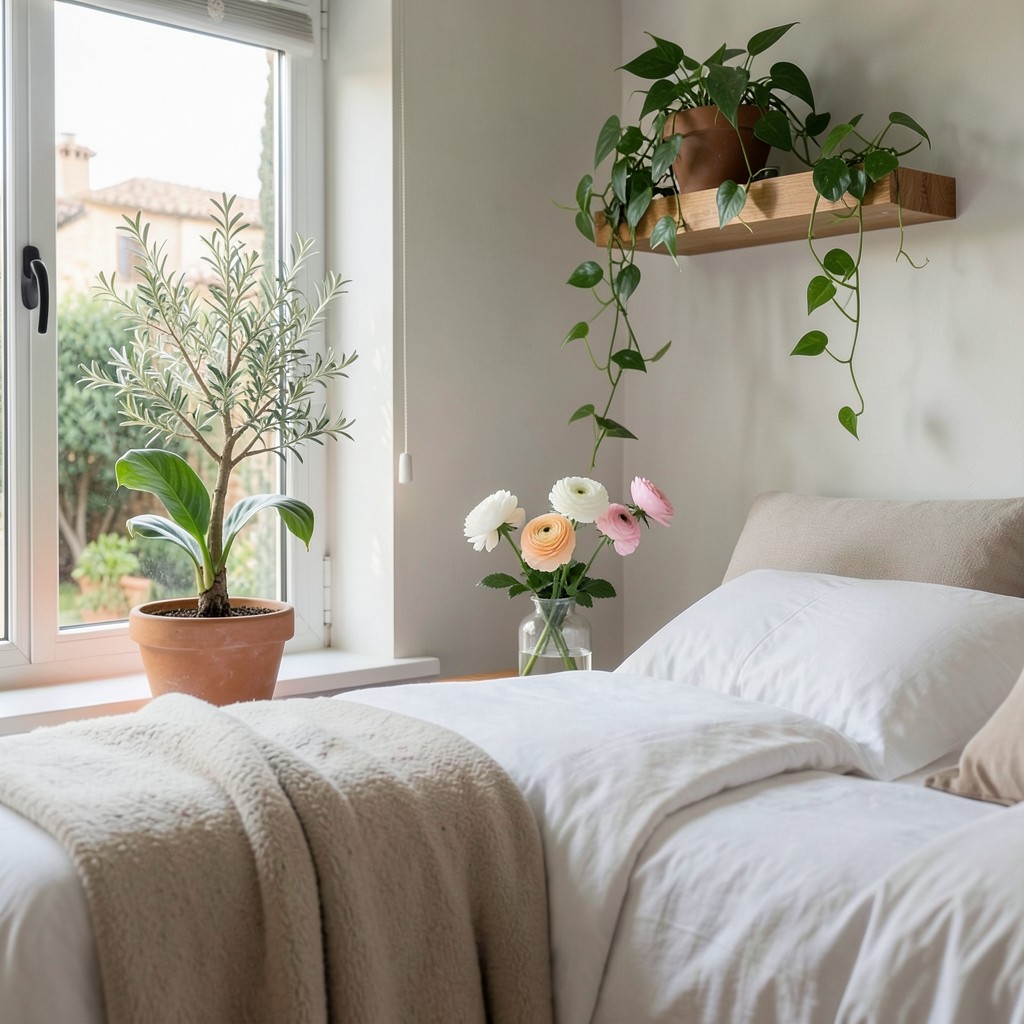
A living plant or a small arrangement of fresh flowers in a guest room is the provision that communicates, more directly than any other design element, that someone put effort in specifically for this arrival. A plant that lives in the room year-round is a design decision. A fresh flower arrangement — cut from the garden or chosen from a market specifically for the guest’s arrival — is a hospitality gesture. The distinction matters to guests because one is a room feature and the other is a welcome, and people feel the difference between being received by a room and being welcomed by a person who prepared it.
The plant selection for a permanent guest room presence should prioritize visual quality and low-maintenance care in equal measure. A peace lily in a ceramic pot by the window stays healthy in indirect light and low-maintenance conditions, produces a white flower periodically, and has air-purifying qualities in an enclosed space used intermittently. A small olive tree in a terracotta pot in a sun-facing window brings the landscape of the Mediterranean into a domestic room with a combination of silver-green foliage and genuine sculptural form that few houseplants match. A trailing pothos on a high shelf brings greenery into the vertical dimension of the room and requires only occasional watering.
The fresh flower arrangement for a guest arrival should be modest in scale and correct in proportion to the surface it occupies. A single stem in a bud vase on the bedside table — one peony, one ranunculus, one garden rose — communicates as much welcome as a full arrangement while occupying almost no space on the most important surface in the room. The flower should be placed on the bedside rather than the dresser because the bedside is the last surface the guest sees before sleeping and the first they see when they wake. The flower is not decoration in that position — it is the first thing a guest sees in a strange room when they open their eyes, and there are worse ways to begin a morning.
50. A Guest Room Designed to Leave a Lasting Impression

The guest room that people remember and talk about for years is not the most expensive room they have slept in — it is the room that made them feel most specifically thought about. The design choices that produce that feeling are not architectural or material in the first instance. They are organizational: the decision to ask what the guest needs before they arrive, to provide what they did not think to ask for, and to create conditions in which rest, privacy, and comfort exist without any effort from the person they were designed for.
The physical expression of that organizational care is a room where every detail is resolved at the level of the guest’s daily use rather than the host’s visual impression. The mattress is tested by lying in it for ten minutes, not assessed by pressing a hand into its center. The reading light is tested by reading three pages of a book from the exact position a guest would read from, not assessed by switching it on from a standing position. The room temperature is checked at six in the morning when it is coldest, not at the comfortable hour of the afternoon. Each of these tests is the difference between a room that was prepared and a room that was considered — and the guest who arrives into a room that was genuinely considered feels that difference before they have opened their bag.
The lasting impression a guest room leaves is made from the accumulation of small, specific decisions rather than one large design gesture. A room with a beautiful piece of art, a bed assembled with the intelligence of someone who thinks about sleep quality, a bedside provision that anticipated a specific need, a plant that is alive and thriving, a reading light that makes an hour with a book genuinely pleasurable, a scent that belongs to the room rather than masking it — this room does not require a renovation budget to produce. It requires attention. The guest rooms that are remembered are the ones where someone paid that attention, and the design serves as its evidence.
Leave a Reply